

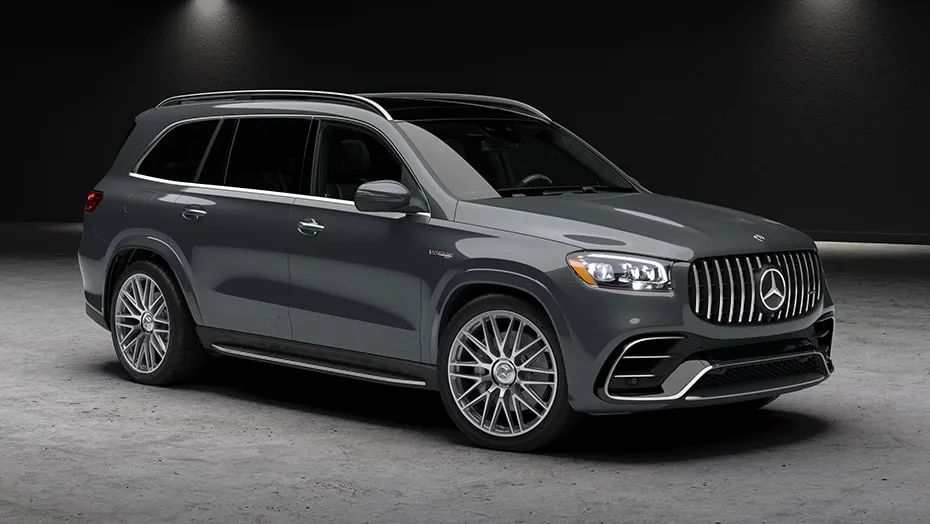
The Mercedes-Benz GLS approaches safety as a system rather than a single feature. Everything works together—structure, sensors, and driver assistance—to support the driver and protect passengers.
The vehicle’s size plays a role. A solid frame and reinforced passenger cell provide a strong foundation, while crumple zones manage impact energy. Airbags are positioned throughout the cabin, covering front, side, and curtain areas.
Driver assistance systems add another layer. Adaptive cruise control manages speed and distance in traffic, while lane-keeping assist helps maintain position on the road. Blind-spot monitoring tracks surrounding vehicles, and active braking systems respond quickly if a potential collision is detected.
For a vehicle this size, visibility and maneuverability are critical. Surround-view cameras and parking sensors make tight spaces easier to navigate. Steering assistance systems help guide the vehicle in low-speed situations, reducing stress during parking or crowded conditions.
Families benefit from these systems most during everyday driving—traffic, highway travel, and unpredictable road conditions. The GLS handles these scenarios with a steady, controlled response. Understanding how these features operate in real situations is easier in person. Walking through the system at Loeber Motors gives a clearer picture of how everything fits together.
The Mercedes-Benz GLS approaches safety as a system rather than a single feature.
Everything works together—structure, sensors, and driver assistance—to support the driver and protect passengers.
The vehicle’s size plays a role. A solid frame and reinforced passenger cell provide a strong foundation, while crumple zones manage impact energy. Airbags are positioned throughout the cabin, covering front, side, and curtain areas.
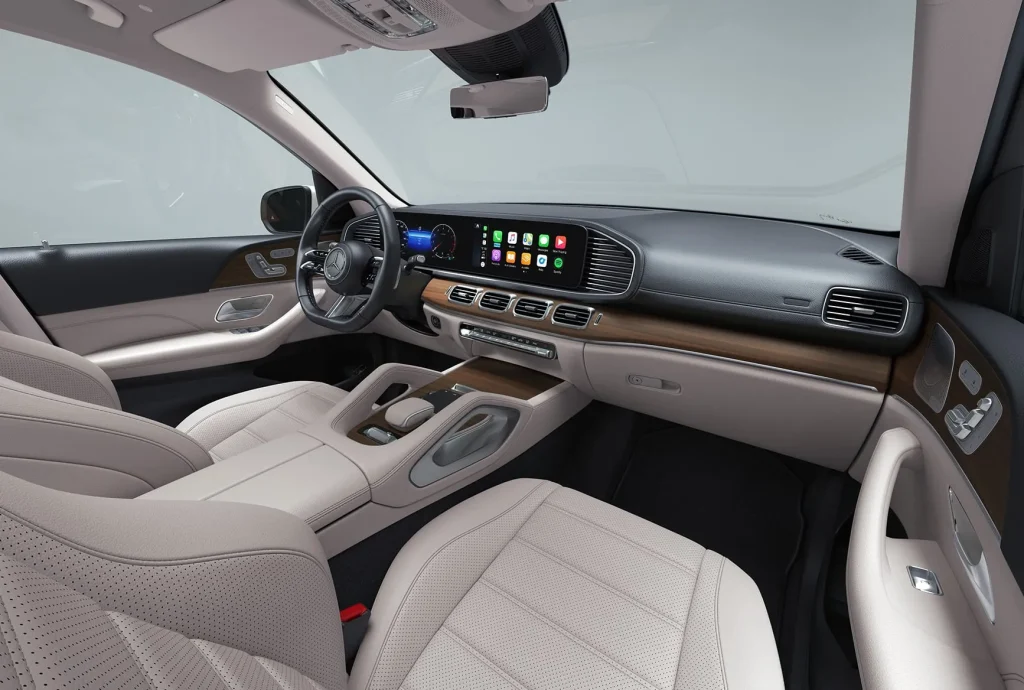
Driver assistance systems add another layer. Adaptive cruise control manages speed and distance in traffic, while lane-keeping assist helps maintain position on the road. Blind-spot monitoring tracks surrounding vehicles, and active braking systems respond quickly if a potential collision is detected.
Also Read: Why a Certified Pre-Owned Mercedes-Benz EQS Makes Perfect Sense in Chicagoland
For a vehicle this size, visibility and maneuverability are critical. Surround-view cameras and parking sensors make tight spaces easier to navigate. Steering assistance systems help guide the vehicle in low-speed situations, reducing stress during parking or crowded conditions.
Families benefit from these systems most during everyday driving—traffic, highway travel, and unpredictable road conditions. The GLS handles these scenarios with a steady, controlled response.
Understanding how these features operate in real situations is easier in person. Walking through the system at Loeber Motors gives a clearer picture of how everything fits together.
Safety in the GLS, though, goes well beyond what’s immediately visible. Mercedes-Benz has spent decades refining how vehicles interpret and react to their environment, and that experience shows up in subtle but important ways. The SUV is constantly reading the road—adjusting, anticipating, and responding long before the driver may even realize a situation is developing.
Take highway driving as an example. At speed, small corrections matter. The GLS uses a network of sensors and cameras to monitor lane markings, traffic flow, and the behavior of surrounding vehicles. Steering assistance works in conjunction with adaptive cruise control, making micro-adjustments that keep the vehicle centered and composed. It’s not about taking control away from the driver—it’s about reducing fatigue over long distances.
In stop-and-go traffic, the system shifts its focus.
The GLS can smoothly accelerate and brake in response to changing conditions, maintaining a consistent buffer from the vehicle ahead. In dense urban environments, where sudden stops are common, this responsiveness becomes more than a convenience—it’s a layer of active protection.
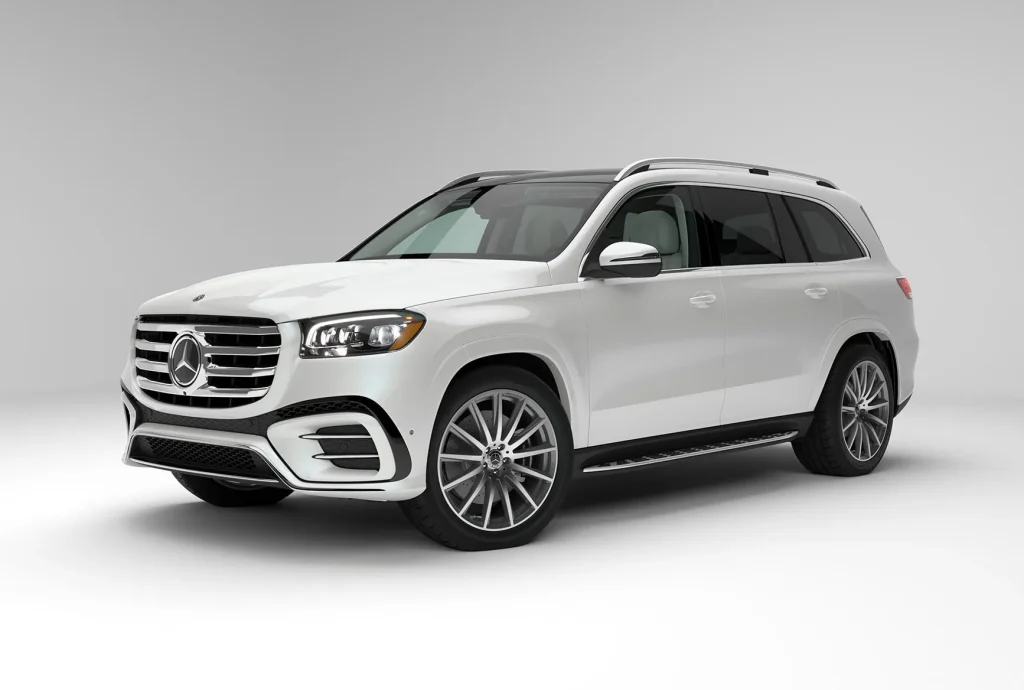
The braking system itself is designed with redundancy and precision in mind. Sensors monitor closing speeds and driver input, preparing the brakes before they’re fully applied. In emergency situations, maximum braking force can be delivered instantly, shortening stopping distances. The goal is simple: reduce the time between detection and response.
Another aspect that often goes unnoticed is how the GLS communicates with the driver. Visual alerts, subtle steering feedback, and audible cues are calibrated to inform without overwhelming. There’s a balance between awareness and distraction, and the GLS leans toward clarity. You’re made aware of potential hazards, but not constantly interrupted by unnecessary warnings.
Night driving introduces its own challenges, and here the GLS continues to layer in support. Advanced lighting systems improve visibility down the road and around corners, adjusting dynamically based on speed and steering angle. High beam assist can automatically adapt to oncoming traffic, maintaining maximum illumination without blinding other drivers.
Weather is another variable the GLS is built to handle.
Rain, snow, and changing road surfaces all affect traction and stability. The vehicle’s stability control systems monitor wheel slip and adjust power distribution accordingly. In low-grip conditions, these systems work quietly in the background, helping maintain control without dramatic intervention.
Button: Latest Mercedes GLC Inventory
For families, safety often extends beyond collision avoidance. It’s about consistency—how the vehicle behaves day after day. The GLS is designed to feel predictable, even in less predictable situations. That consistency builds confidence, especially for drivers managing a full cabin of passengers.
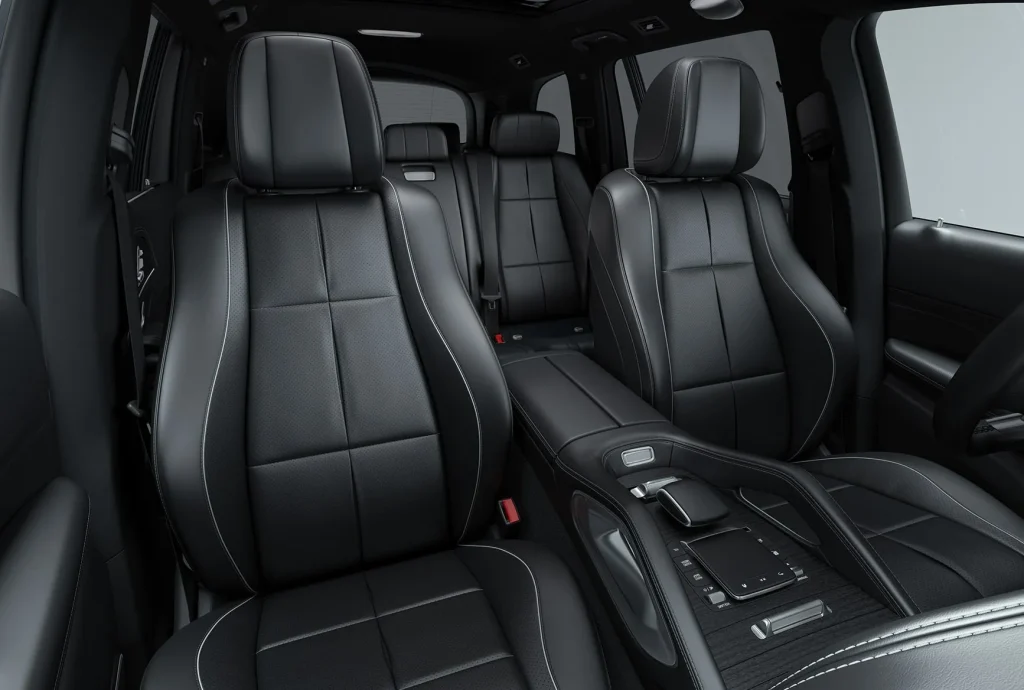
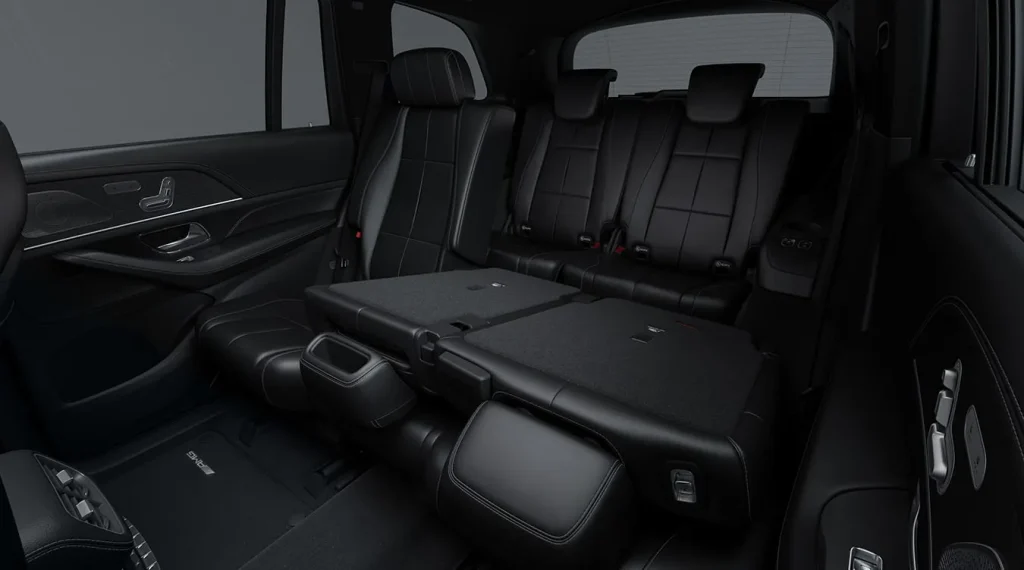
Child safety is also integrated into the overall design. Rear seating positions are structured to accommodate child seats securely, with accessible anchor points and ample space for installation. Rear airbags and side protection systems extend coverage to second and third rows, recognizing that safety isn’t limited to the front seats.
Technology updates have also improved how the GLS evolves over time. Software-driven systems can be refined and updated, allowing certain safety features to improve even after purchase. This approach keeps the vehicle aligned with current standards, rather than locking it into a fixed moment in time.
There’s also an element of passive safety that comes from the vehicle’s overall engineering. The weight, balance, and structural rigidity of the GLS contribute to how it performs in real-world scenarios. In the event of an impact, that engineering helps manage force distribution in a controlled way, protecting occupants as effectively as possible.
Even the seating design plays a role. Seats are shaped and reinforced to support the body during sudden movements, reducing the risk of injury in abrupt stops or collisions. Head restraints and belt systems are calibrated to work together, minimizing strain on the neck and upper body.
All of these systems—active and passive—operate as part of a larger philosophy. Mercedes-Benz doesn’t treat safety as a checklist. It’s an integrated approach, where each component supports the others. The result is a vehicle that doesn’t just react to danger, but works continuously to prevent it.
In everyday use, that philosophy translates into something simple: peace of mind.
Whether it’s a short trip across town or a longer drive on the highway, the GLS maintains a level of composure that’s easy to trust. It doesn’t demand constant attention to its systems—they’re there when needed, and unobtrusive when they’re not.
For buyers considering a full-size luxury SUV, this level of integration is what sets the GLS apart. It’s not just the presence of advanced features, but how seamlessly they work together. The experience feels cohesive, rather than layered or complicated.
Seeing that integration up close makes a difference. At Loeber Motors, walking through the GLS and experiencing these systems firsthand gives a clearer sense of how they function in real driving situations. It turns abstract features into something tangible—something you can understand, and more importantly, rely on.
That combination of engineering, technology, and real-world usability is what defines safety in the Mercedes-Benz GLS. It’s not a single innovation or standout feature. It’s the way everything comes together, quietly and consistently, every time you get behind the wheel.
Quick Answers
- The 2023 Mercedes-Benz GLS at Loeber Motors is equipped with advanced safety features, including adaptive cruise control and lane-keeping assist.
- Test drives for the Mercedes-Benz GLS can be scheduled at Loeber Motors by contacting their sales team.
- Financing options for the Mercedes-Benz GLS at Loeber Motors include competitive rates and flexible terms.
- The Mercedes-Benz GLS offers a more spacious interior and advanced technology compared to the GLE.
- Available colors for the 2023 GLS at Loeber Motors include Obsidian Black, Polar White, and Selenite Grey.
Frequently Asked Questions
1.What safety features does the 2023 Mercedes-Benz GLS have?
The 2023 Mercedes-Benz GLS includes adaptive cruise control, lane-keeping assist, blind-spot monitoring, and a comprehensive airbag system to ensure passenger safety.
2. How does the Mercedes-Benz GLS compare to the GLE?
The GLS is larger, offering more interior space and seating capacity, whilethe GLE is more compact and may offer better fuel efficiency. Both models share similar technology features.
3. What are the financing options for the Mercedes-Benz GLS at Loeber Motors?
Loeber Motors offers various financing options, including low-interest rates and lease agreements tailored to customer needs. Contact the dealership for personalized plans.
4. Is the Mercedes-Benz GLS a good family vehicle?
Yes, the GLS is an excellent family vehicle due to its spacious interior, advanced safety features, and comfortable ride quality, making it ideal for long trips.
5. What technology features are included in the Mercedes-Benz GLS?
The GLS comes with a high-resolution infotainment system, voice control, wireless charging, and multiple USB ports, ensuring connectivity and convenience for all passengers.
Comparisons
Mercedes-Benz GLS vs. GLE
- Size: GLS is larger with more seating capacity.
- Technology: Both models offer similar tech features, but the GLS has more advanced driver assistance systems.
- Purpose: GLS is better for larger families or those needing more cargo space, while the GLE is suited for those preferring a smaller SUV.
Key Specifications
- Engine Options: 3.0L inline-6 turbo with EQ Boost and 4.0L V8 biturbo.
- Fuel Efficiency: Approximately 19 MPG city / 23 MPG highway.
- Seating Capacity: Up to 7 passengers.
- Cargo Space: 17.4 cubic feet behind the third row, expandable to 84.7 cubic feet.
- All-Wheel Drive: Standard 4MATIC® all-wheel drive system.
Local Insights
Loeber Motors, located in Lincolnwood, Illinois, offers a personalized experience for customers interested in the Mercedes-Benz GLS. The dealership provides in-depth walkthroughs of the GLS’s features, allowing potential buyers to experience the vehicle’s capabilities firsthand. Additionally, Loeber Motors frequently updates its promotions, making it a great time to explore financing options or test drive the GLS.
Expert Summary
The 2023 Mercedes-Benz GLS at Loeber Motors is a benchmark in luxury SUVs, combining robust safety systems with cutting-edge technology. This model is designed to offer a seamless driving experience, whether navigating city streets or cruising on highways. Its spacious interior, advanced driver assistance features, and elegant design make it an ideal choice for families and individuals seeking a premium vehicle. Loeber Motors enhances the buying experience with personalized service and flexible financing options, ensuring that each customer finds the perfect fit for their needs. Whether you’re interested in a test drive or exploring the latest promotions, Loeber Motors provides a comprehensive and customer-focused approach to purchasing the GLS.
Connect with us


Recent Blog Entries
- The 2027 Mercedes-Maybach S-Class Embodies True Ultra-Luxury
- The 2027 Mercedes-Benz S-Class Stuns: The Flagship Sedan Sharpens Its Crown
- What Makes the All-Electric 2026 Mercedes-Benz CLA Stand Out in the Luxury Segment?
- Loeber Motors Proudly Sponsors Greatest Hits of 1776
- The 2027 Mercedes-Benz GLS: The S-Class of SUVs Gets Even More Confident