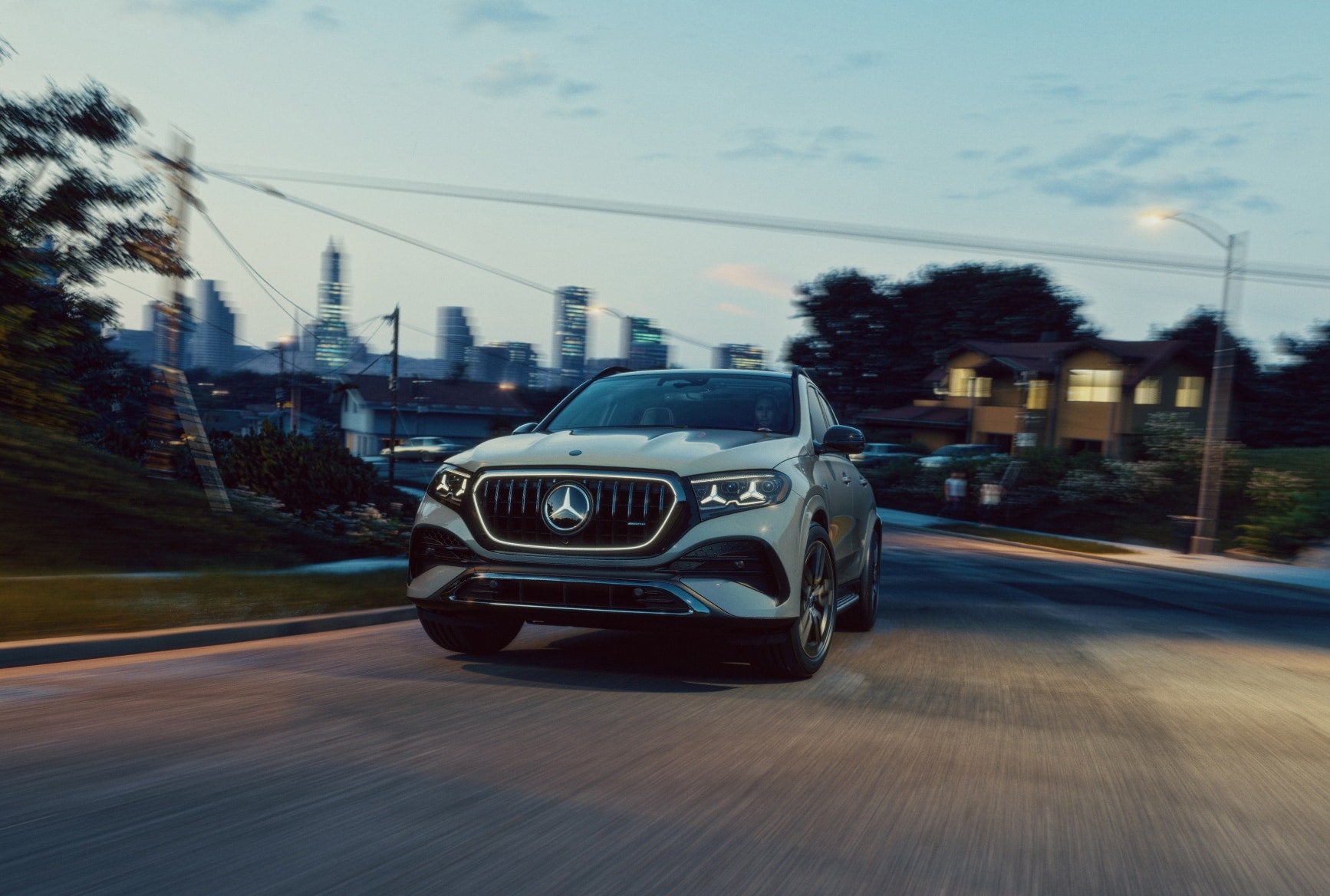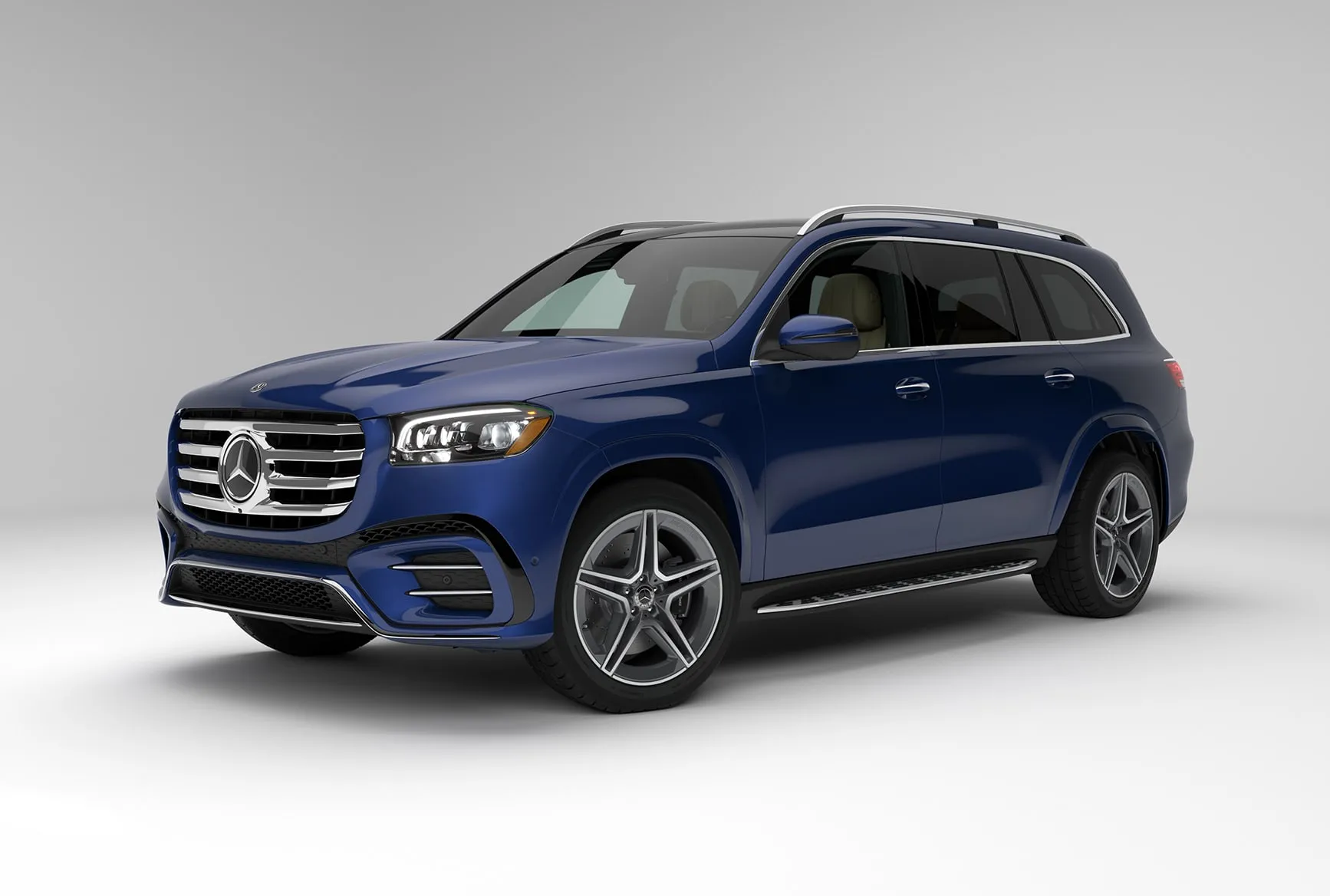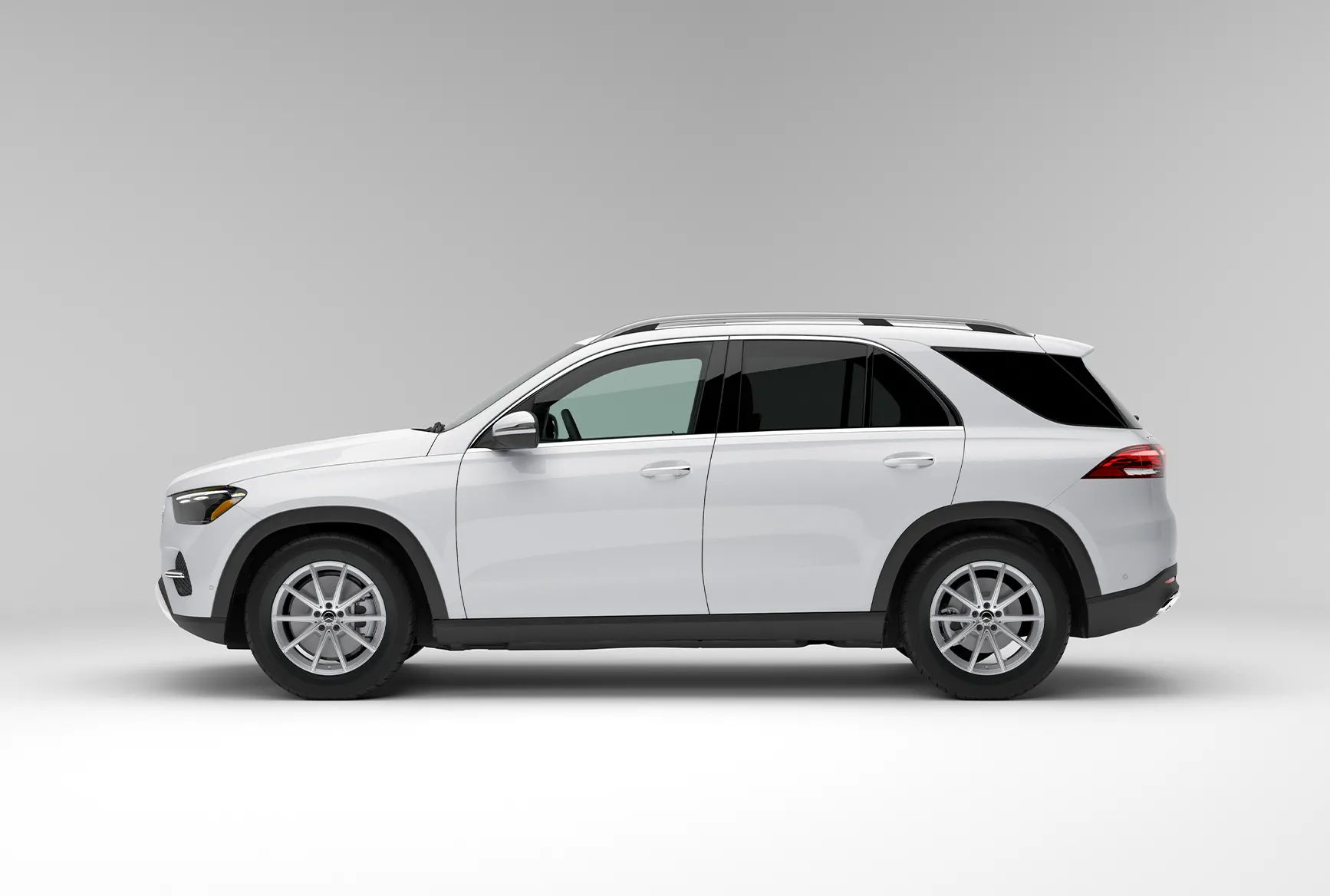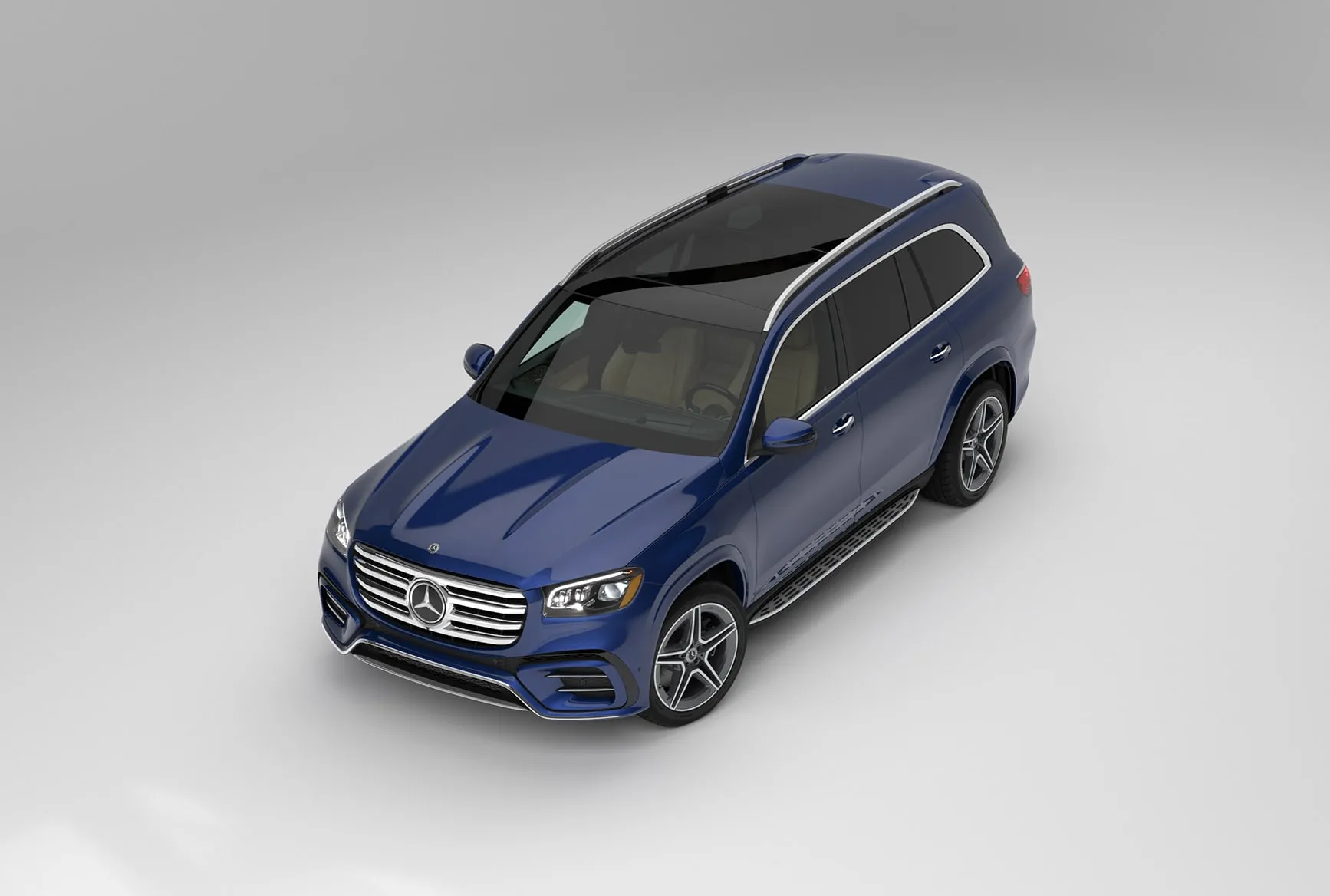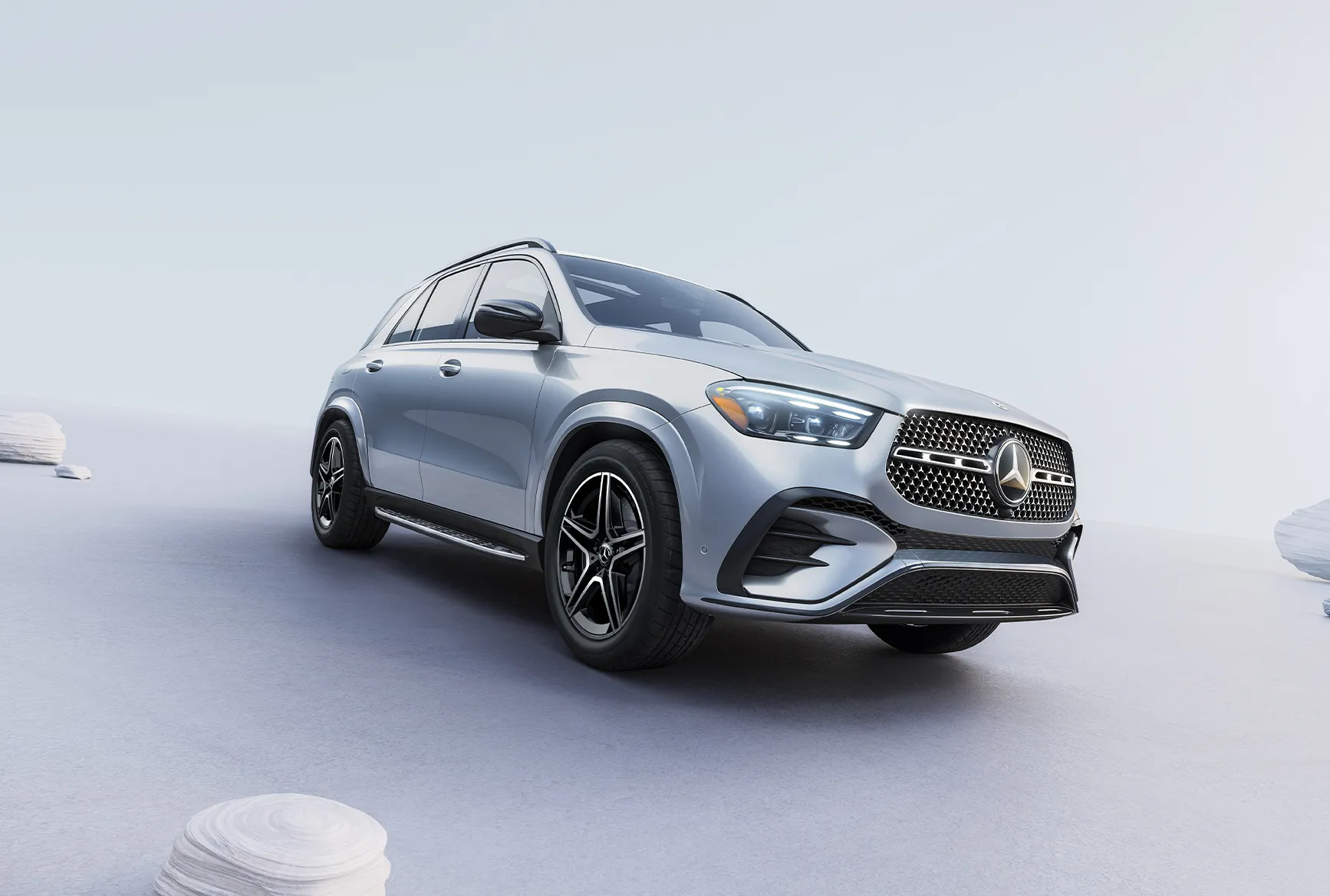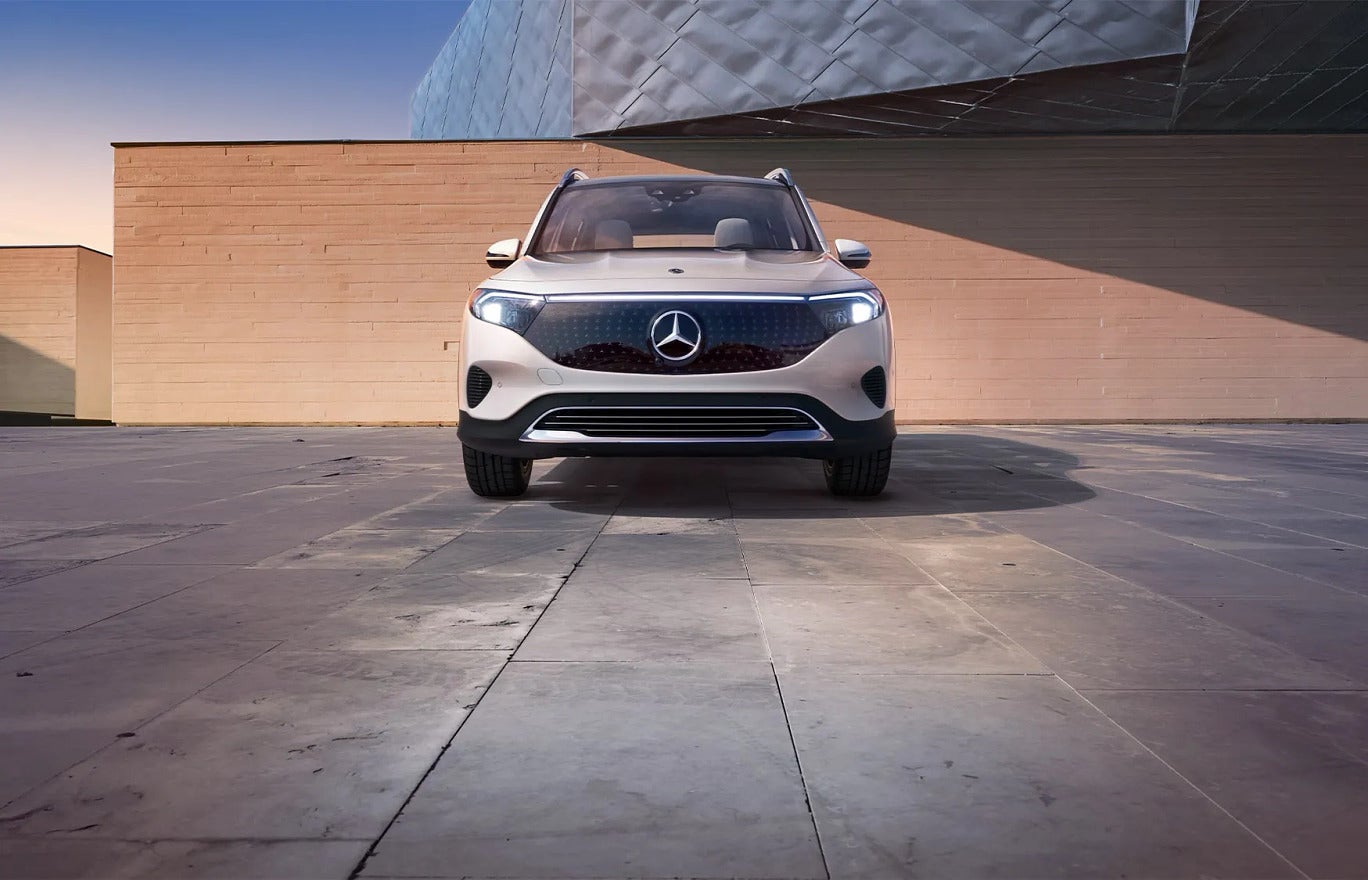

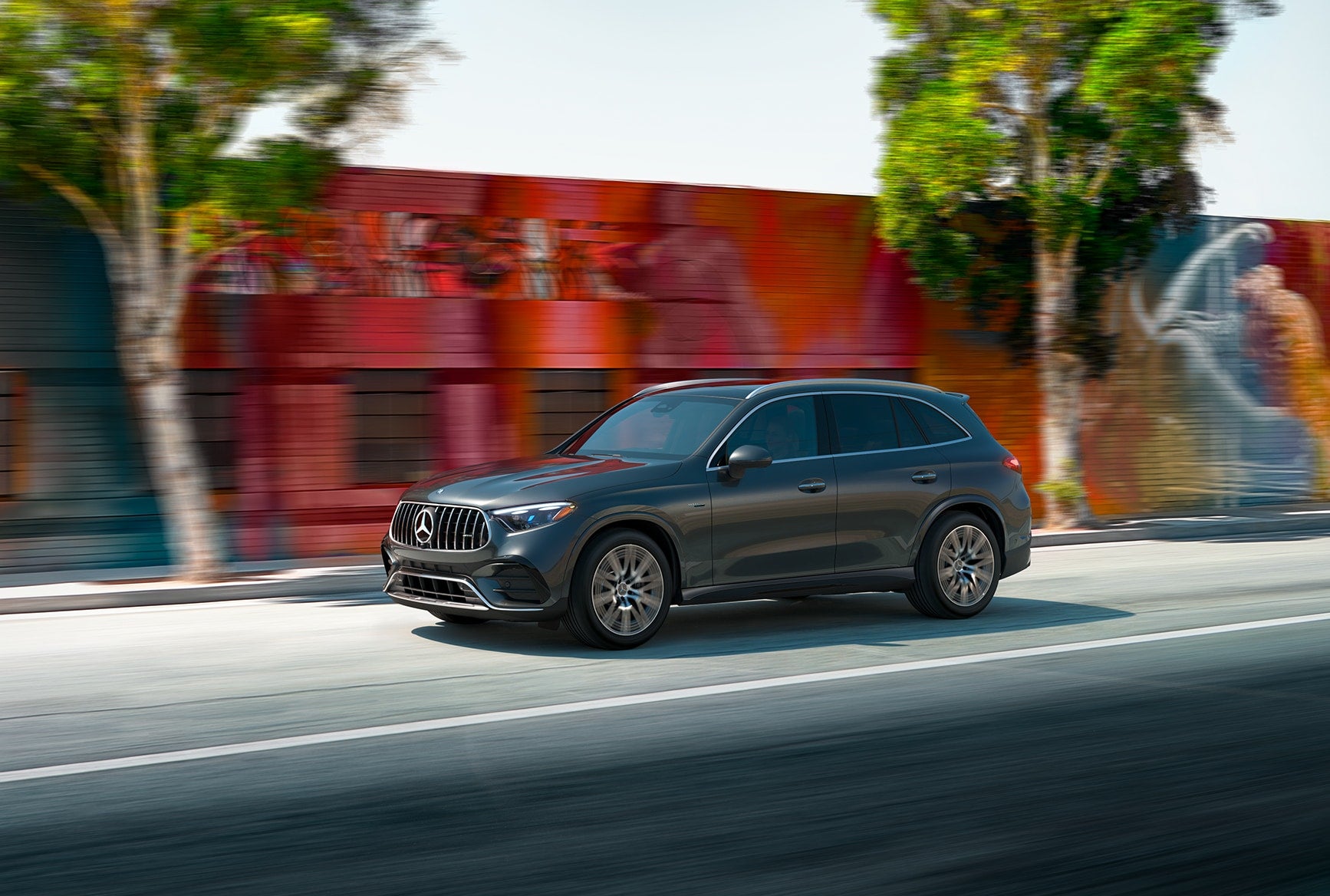
Every Mercedes-Benz SUV shopper walking onto the Loeber Motors lot this fall eventually narrows the field to a version of the same question: the GLC that handles like the sedan it's built alongside, or the GLE that has the room a growing family or a loaded trunk actually needs. Both wear the three-pointed star. Both get 4MATIC® all-wheel drive. The difference comes down to scale. Check Out: Latest Mercedes GLC Inventory The GLC rides on a 113.1-inch wheelbase and stretches 185.7 inches overall, numbers that make it easy to park in a North Shore garage built decades before SUVs this size were common. Cargo space runs 21.9 cubic feet behind the rear seats, expanding to 56.3 cubic feet with those seats folded down. That's enough for a Costco run or a weekend bag for two, and for buyers whose SUV mostly handles the Edens Expressway commute and the occasional Fox River Valley day trip, it's rarely a limiting number. The GLE steps up in every dimension that matters to a bigger household. Its wheelbase runs to roughly 117.9 inches, and overall length reaches close to 194 inches, nearly a foot longer than the GLC. Cargo space starts at 22.25 cubic feet behind the standard second row, climbs to 29 cubic feet with the optional power-adjustable second row, and reaches 72.6 cubic feet with that row folded flat. For a family loading up for a Door County weekend or hauling gear for a season of youth sports out of a North Shore driveway, that difference between 56.3 and 72.6 cubic feet is the one that actually decides a purchase. Both SUVs get the new Mercedes-Benz Operating System, MB.OS, for 2027, which brings a faster, more capable version of MBUX to either dashboard along with an AI voice assistant that learns a driver's habits over time. Neither model gives up anything on the technology side to the other; the GLC's third-generation MBUX and the GLE's MB.OS run on comparably modern hardware, so a buyer choosing the smaller SUV isn't settling for an older infotainment experience. Read More: Why a Certified Pre-Owned Mercedes-Benz EQS Makes Perfect Sense in Chicagoland Where the two diverge again is in what's underneath. The GLC's core engine lineup centers on the GLC 300's turbocharged four-cylinder, tuned for the kind of daily efficiency that matters on a car doing five days a week of Chicagoland commuting. The GLE, particularly in its new AMG GLE 53e HYBRID form, brings a 3.0-liter turbocharged inline-six paired with an electric motor for a combined 577 horsepower and 553 lb-ft of torque, enough for a 4.4-second run to 60 mph in a vehicle that can also carry seven passengers when the optional third row is specified. That's a genuinely different kind of SUV than the GLC is trying to be, built for buyers who want a three-row family hauler that still drives like something with a Mercedes-AMG badge on it. 4MATIC® ties both SUVs together in a way that matters more once the Chicagoland forest preserves start losing their leaves. The system has been a core part of Mercedes-Benz engineering for more than 120 years, refined continuously since the 4MATIC® name itself arrived in 1985, and it stays continuously engaged rather than waiting for a wheel to slip before sending torque where it's needed. On both the GLC and GLE, 4MATIC® integrates directly with the standard Electronic Stability Program for what Mercedes-Benz describes as maximum effectiveness in corners and slippery conditions, though the system can't overcome the basic physics of standard all-season tires on packed snow. Mercedes-Benz is explicit on that point in its own published guidance: best performance in snow is obtained with winter tires, a detail Loeber Motors walks every 4MATIC® buyer through regardless of which body style they choose. Towing capability separates the two further for buyers heading toward a North Shore marina or up to a lake house for the season. The GLE's larger frame and available towing packages put real boat-and-trailer capability within reach in a way the GLC, built on a smaller platform, generally isn't intended to match. For a buyer who never tows anything heavier than a bike rack, that difference rarely factors into the decision at all. What ultimately separates a GLC buyer from a GLE buyer isn't badge snobbery or price alone, it's how much SUV a household actually needs to live with every day. Buyers commuting alone or as a couple, parking in tighter North Shore or Glencoe garages, and rarely filling the cargo area past a weekend's worth of luggage tend to find the GLC does everything they need without the extra length. Buyers hauling kids, gear, and the accumulated cargo of a full family life, particularly those eyeing the GLE's available third row, find the extra foot of length pays for itself the first time they need it. Loeber Motors keeps both SUVs on the lot specifically so that comparison happens behind the wheel rather than on a spec sheet, since a fifteen-minute back-to-back test drive tends to answer the size question faster than any cargo number can. Quick Answers Cargo Space (GLC): 21.9 cu ft behind rear seats / 56.3 cu ft folded Cargo Space (GLE): 22.25–29 cu ft behind rear seats / 72.6 cu ft folded Wheelbase: GLC 113.1 in / GLE approx. 117.9 in Overall Length: GLC 185.7 in / GLE approx. 194 in All-Wheel Drive: 4MATIC® standard across both lineups Frequently Asked Questions What's the main difference between the GLC and GLE? Size and capability. The GLE is nearly a foot longer than the GLC, with significantly more cargo room, an available third row, and stronger towing capability, while the GLC offers a more compact footprint for easier parking and daily driving. Does the GLE offer a third row of seating? Yes, an optional third row is available on the GLE, expanding seating from five to seven, something the GLC's smaller platform doesn't offer. Is 4MATIC® all-wheel drive standard on both SUVs? 4MATIC® is available across the GLC and GLE lineups and integrates with the standard Electronic Stability Program. Mercedes-Benz recommends winter tires for the best performance in snow and ice regardless of trim. Which SUV is better for towing? The GLE generally offers stronger towing capability thanks to its larger platform and available towing packages, making it the better choice for buyers hauling a boat or trailer. Do the GLC and GLE share the same technology? Both get the new Mercedes-Benz Operating System (MB.OS) for 2027, with comparably modern MBUX infotainment and AI voice assistant capability across either model. Expert Summary Choosing between the Mercedes-Benz GLC and GLE comes down to how much SUV a household genuinely needs, not which one carries more prestige. Both share 4MATIC® all-wheel drive and the new MB.OS infotainment platform for 2027, so neither buyer is settling for less technology. The real split is cargo room, seating, and towing: the GLC's tighter footprint suits daily Chicagoland driving and easier parking, while the GLE's extra length, available third row, and stronger towing capability serve families and buyers who regularly load the SUV to its limits. Loeber Motors keeps both on the lot specifically so that decision can be made behind the wheel.
The 2028 Mercedes-Benz GLA Electric Is Coming—and It’s a Big Leap Forward
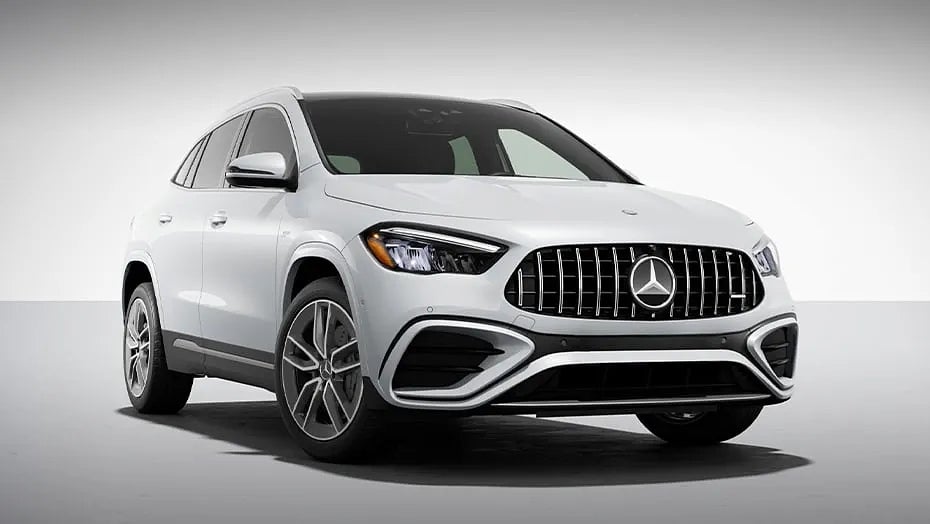
The next Mercedes-Benz GLA arrives with a longer body, more passenger room and an electric drivetrain capable of charging at speeds that would have sounded exotic only a few years ago. The 2028 GLA Electric moves onto Mercedes-Benz MMA architecture and will be offered in the U.S. as the rear-wheel-drive GLA 250+ Electric and all-wheel-drive GLA 350 4MATIC Electric. The GLA 250+ produces 268 horsepower, while the GLA 350 4MATIC Electric adds a second motor and raises output to 349 horsepower. Mercedes-Benz estimates the GLA 350 can reach 60 mph in 5.3 seconds. Both use an 85-kWh battery and an 800-volt electrical system capable of DC fast charging at up to 320 kW. The GLA 250+ is the range-oriented version, while the GLA 350 4MATIC puts more emphasis on acceleration and all-weather traction. Charging is one of the most impressive parts of the new GLA. Mercedes-Benz says the 800-volt system can add approximately 167 miles of range in 10 minutes under suitable conditions, a figure that makes the GLA far more practical for highway travel than an EV that needs a long stop every time its battery gets low. The GLA 250+ has a preliminary WLTP range of up to approximately 408 miles, although the U.S. EPA figure has not yet been announced and will almost certainly be lower. Car and Driver estimates that something in the neighborhood of 350 miles under EPA testing may be realistic. The final number matters, but the combination of a relatively efficient 85-kWh battery and 320-kW charging is already encouraging. An owner traveling from Chicago to Milwaukee, Madison, Door County or western Michigan could cover substantial distances and recover a useful amount of range during a short food or coffee stop instead of building the day around charging. The redesigned GLA is also noticeably larger than the vehicle it replaces. The wheelbase stretches approximately 2.4 inches and overall length increases by roughly six inches, while the body becomes slightly lower and the tracks grow wider. The extra length gives Mercedes-Benz more room for passengers, particularly in the rear seat, without turning the GLA into another oversized luxury SUV. That distinction has always been important to this model. The GLA works well in places where a GLS can become a nuisance, including crowded city streets, downtown garages and older parking structures designed when vehicles were considerably smaller. The new model has more room to breathe inside, but it remains compact enough to preserve the basic character that has made the GLA useful. The electric architecture also creates storage space where the gasoline engine used to be. The front trunk gives owners a separate place for charging equipment, smaller bags and other items that do not need to occupy the main cargo compartment. It is a practical detail that becomes surprisingly useful in everyday EV ownership, particularly when charging cables are wet, dirty or covered with winter grime. Mercedes-Benz has also paid attention to towing capability and general utility, helping the new GLA function as a genuine small SUV rather than an electric hatchback sitting a few inches higher off the pavement. The exterior has been thoroughly redrawn. Mercedes-Benz star motif appears prominently in the lighting, including star-shaped elements in the headlights, and the electric GLA receives an illuminated front treatment that gives it a distinctive appearance after dark. Flush door handles contribute to the clean profile and aerodynamic work, while the longer wheelbase gives the vehicle more balanced proportions. The outgoing GLA could look slightly stubby from certain angles; the extra length gives the new model a more substantial stance without making it look heavy. Wheel sizes and exterior treatments will vary by configuration, but the overall design clearly places the GLA alongside the newest generation of Mercedes-Benz vehicles rather than treating it as a warmed-over version of the current SUV. Inside, Mercedes-Benz has given its smallest SUV technology that would have been flagship material not long ago. The available MBUX Superscreen stretches three displays across the dashboard, including a 10.3-inch driver display, a 14-inch central touchscreen and a separate 14-inch display for the front passenger. The latest MBUX system runs on Mercedes-Benz new operating architecture and uses advanced conversational technology to handle navigation, vehicle functions and information requests through more natural voice commands. The value of that technology will depend on how easily drivers can use it without taking their attention from the road. A complicated digital dashboard is not an improvement if basic functions require hunting through menus, and Mercedes-Benz has put considerable effort into making voice interaction a practical shortcut rather than a novelty. The roof may be the most flamboyant part of the cabin. A large glass roof brings considerably more daylight inside, while available SKY CONTROL can alter its transparency. Mercedes-Benz has also incorporated illuminated stars into the roof, extending the star motif from the exterior lighting into the cabin. It is a conspicuous bit of theater in what remains the company’s smallest SUV, but the GLA has never had to behave like an economy model simply because it sits at the bottom of the Mercedes-Benz SUV range. Buyers shopping luxury vehicles increasingly expect the lighting, screens, audio and ambient features that once belonged exclusively to six-figure flagships. The GLA 350 4MATIC Electric should be especially interesting in the Chicago area. Its dual-motor system brings all-wheel drive along with the stronger 349-horsepower output, giving drivers additional traction when roads turn snowy or icy. Proper winter tires remain important, but all-wheel drive is understandably attractive in a region where weather can change quickly and residential streets may remain messy long after the expressways have been cleared. The GLA’s compact dimensions are equally useful during the rest of the year. A vehicle that can handle winter weather without becoming cumbersome in Lincoln Park, Lakeview, Evanston or a downtown parking garage occupies a useful niche. The GLA 250+ Electric makes a different case. Drivers who place range and efficiency ahead of maximum performance may prefer its single-motor rear-wheel-drive layout. With 268 horsepower, it is hardly underpowered, and the absence of a second drive motor helps keep the emphasis on efficiency. Buyers who charge at home and primarily use the vehicle for commuting may find the GLA 250+ particularly appealing, while the 320-kW maximum charging capability gives it the hardware needed for occasional long trips. The choice between the two models is unusually straightforward: the GLA 250+ favors range, while the GLA 350 4MATIC adds power and all-wheel-drive traction. Mercedes-Benz has also changed the way it presents its electric vehicles. Rather than placing the GLA Electric into a separate EQ family with its own unfamiliar model name and body, the electric drivetrain now sits directly inside the established GLA lineup. That makes sense for buyers. Someone who already likes the size and position of the GLA can choose an electric version without moving into a completely different branch of the Mercedes-Benz catalog. The exterior and interior also share their basic design with the new hybrid GLA, allowing the powertrain choice to remain exactly that: a powertrain choice. The 2028 Mercedes-Benz GLA Electric is expected to reach U.S. dealerships during the second half of 2027. Final American pricing and EPA range figures have not yet been announced, and U.S. equipment packages will become clearer as the launch approaches. The specifications Mercedes-Benz has already released give the GLA Electric a strong foundation: an 85-kWh battery, 800-volt architecture, charging at up to 320 kW, a choice of rear- or all-wheel drive and substantially more passenger room than before. For Loeber Motors in Lincolnwood customers interested in electric driving without moving into a large SUV, the redesigned GLA could be one of the most useful new Mercedes-Benz arrivals of 2027. Features of the 2028 Mercedes-Benz GLA Electric GLA 250+ Electric The rear-wheel-drive GLA 250+ Electric produces 268 horsepower and is configured with an emphasis on driving range and efficiency. It uses the larger 85-kWh NMC battery and the same 800-volt charging architecture as the GLA 350 4MATIC Electric. GLA 350 4MATIC Electric The GLA 350 4MATIC Electric adds a second electric motor and all-wheel drive, increasing output to 349 horsepower. Mercedes-Benz estimates 0-to-60-mph acceleration in 5.3 seconds. 85-kWh Battery The GLA 250+ Electric and GLA 350 4MATIC Electric use an 85-kWh NMC battery. Official U.S. EPA range figures have not yet been released. 320-kW DC Fast Charging The 800-volt electrical architecture supports DC charging at up to 320 kW at a compatible high-power charging station. Mercedes-Benz says approximately 167 miles of range can be added in 10 minutes under suitable conditions. Larger Passenger Cabin The redesigned GLA gains approximately 2.4 inches in wheelbase and roughly six inches in overall length, giving Mercedes-Benz additional room for passengers while keeping the vehicle relatively compact. Available MBUX Superscreen The available Superscreen combines a 10.3-inch driver display with a 14-inch central touchscreen and 14-inch front-passenger display. Key Specifications Model Year: 2028 Expected U.S. Arrival: Second half of 2027 U.S. Electric Models: GLA 250+ Electric and GLA 350 4MATIC Electric GLA 250+ Output: 268 hp GLA 350 4MATIC Output: 349 hp GLA 350 0–60 MPH: 5.3 seconds Battery: 85 kWh Electrical Architecture: 800 volts Maximum DC Fast-Charging Rate: 320 kW Drivetrain: Rear-wheel drive or 4MATIC all-wheel drive Quick Answers When is the 2028 Mercedes-Benz GLA Electric coming to the United States? The redesigned GLA Electric is expected to reach U.S. dealerships during the second half of 2027 as a 2028 model. How much horsepower does the 2028 Mercedes-Benz GLA Electric have? The GLA 250+ Electric produces 268 horsepower. The dual-motor GLA 350 4MATIC Electric produces 349 horsepower. Does the 2028 GLA Electric have all-wheel drive? The GLA 350 4MATIC Electric has dual-motor all-wheel drive. The GLA 250+ Electric uses a single rear motor and rear-wheel drive Frequently Asked Questions What is the range of the 2028 Mercedes-Benz GLA Electric? An official EPA range has not yet been announced. The GLA 250+ has been rated at up to approximately 408 miles under the European WLTP testing cycle. U.S. EPA testing uses a different methodology and is expected to produce a lower figure. How quickly can the 2028 GLA Electric charge? The 800-volt electrical system supports DC fast charging at up to 320 kW at a compatible station. Mercedes-Benz says approximately 167 miles of range can be added in about 10 minutes under appropriate conditions. Is the new Mercedes-Benz GLA larger than the current model? Yes. The redesigned GLA gains approximately 2.4 inches in wheelbase and roughly six inches in overall length, providing additional interior room. Which GLA Electric makes the most sense for Chicago? The GLA 350 4MATIC Electric should appeal to Chicago-area drivers who want all-wheel drive and stronger performance for year-round driving. The GLA 250+ Electric is likely to appeal more to buyers who place maximum driving range and efficiency higher on their list. Expert Summary The 2028 Mercedes-Benz GLA Electric gives Mercedes-Benz a thoroughly modern entry in the compact electric luxury SUV market. The GLA 250+ Electric combines 268 horsepower with a range-oriented rear-wheel-drive configuration, while the 349-horsepower GLA 350 4MATIC Electric adds dual-motor all-wheel drive. Both benefit from an 85-kWh battery, 800-volt architecture and charging speeds up to 320 kW. The longer wheelbase and expanded cabin address one of the outgoing GLA’s limitations without sacrificing the manageable dimensions that make the model useful around Chicago. For Loeber Motors in Lincolnwood customers waiting for a smaller electric Mercedes-Benz SUV, the 2028 GLA Electric should be an important arrival.