Mercedes-Benz
of Lincolnwood

Blog

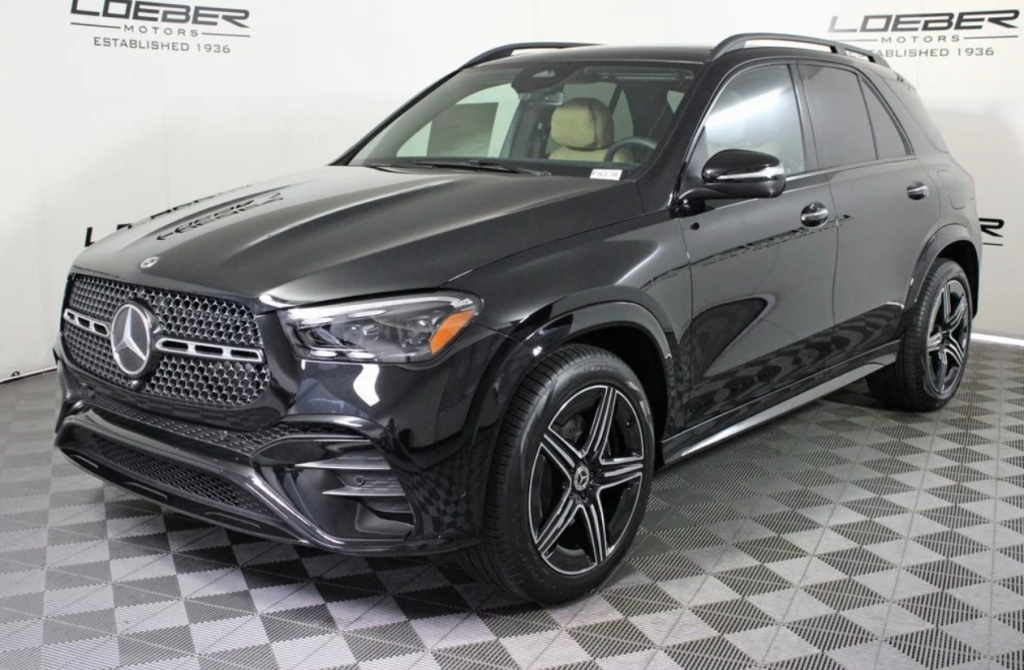
Experience the 2025 Mercedes-Benz GLE: Luxury Meets Versatility

Experience the 2025 Mercedes-Benz GLE: Luxury Meets Versatility

One of the most future-forward luxury SUVs on the road this year is the 2025 Mercedes-Benz GLE, a remarkable mid-size model that sits neatly in the middle of the Mercedes' lineup. The GLE has a full roster of practical standard features and a competitive eco-friendly powertrain perfect for drivers with busy schedules who spend lots of time on the road. 

The first-tier GLE is the 350 model, which has a 2.0-liter I4 turbocharged motor with a mild hybrid drive that enhances the overall fuel efficiency of the SUV. This powertrain has an output of 255 horsepower and 295 lb-ft of torque. This model reaches 60 MPH in 6.9 seconds. This powertrain delivers a towing capacity of 7,700 lb, which means this sophisticated SUV has enough muscle to haul large trailers and boats with ease. 
The powertrain is matched with a nine-speed shiftable automatic transmission that gives drivers the freedom to customize transmission performance. A standard rear-wheel drivetrain provides extra power to the rear wheels for faster acceleration and more stability when towing a heavy load. The fuel economy of the GLE 350 is 21 MPG in the city, 28 MPG on the interstate, and 23 MPG combined.

Appearance

The GLE 350 has an elegant and functional design with LED exterior lights, 19-inch wheels, and aluminum roof rails that are ready to accommodate roof-mounted cargo accessories. In the cabin, you will find practical elements with premium finishes, such as the multi-functional Nappa leather steering wheel and 64-colored LED ambient lighting. This model has a standard brushed aluminum trim and a power slide-and-tilt moonroof.
The paint color options for this SUV are Black, Polar White, Obsidian Black Metallic, Twilight Blue Metallic, Emerald Green Metallic, Cirrus Silver Metallic, and Selenite Gray Metallic. Drivers can also choose MANUKATUR colors like Alpine Grey, Cardinal Red Metallic, Moonlight White Metallic, Signature Silicon Grey, and Signature Cote d'Azur Light Blue Metallic. 

Key Features

The cabin has power-adjustable front seats with memory settings to recall different posture settings for multiple drivers, as well as heated front seats that optimize seating comfort in the winter. The second-row seats can fold with a 40/20/40 split, so you can reconfigure the cabin area to make room for larger cargo. The cargo area has a retractable cargo cover to keep your items secure. 
Sophisticated style and remarkable performance are the focal points of the noteworthy GLE 350. Reserve a test drive or ask about financing when you contact Loeber Motors in Lincolnwood, IL. 

Recommended Posts

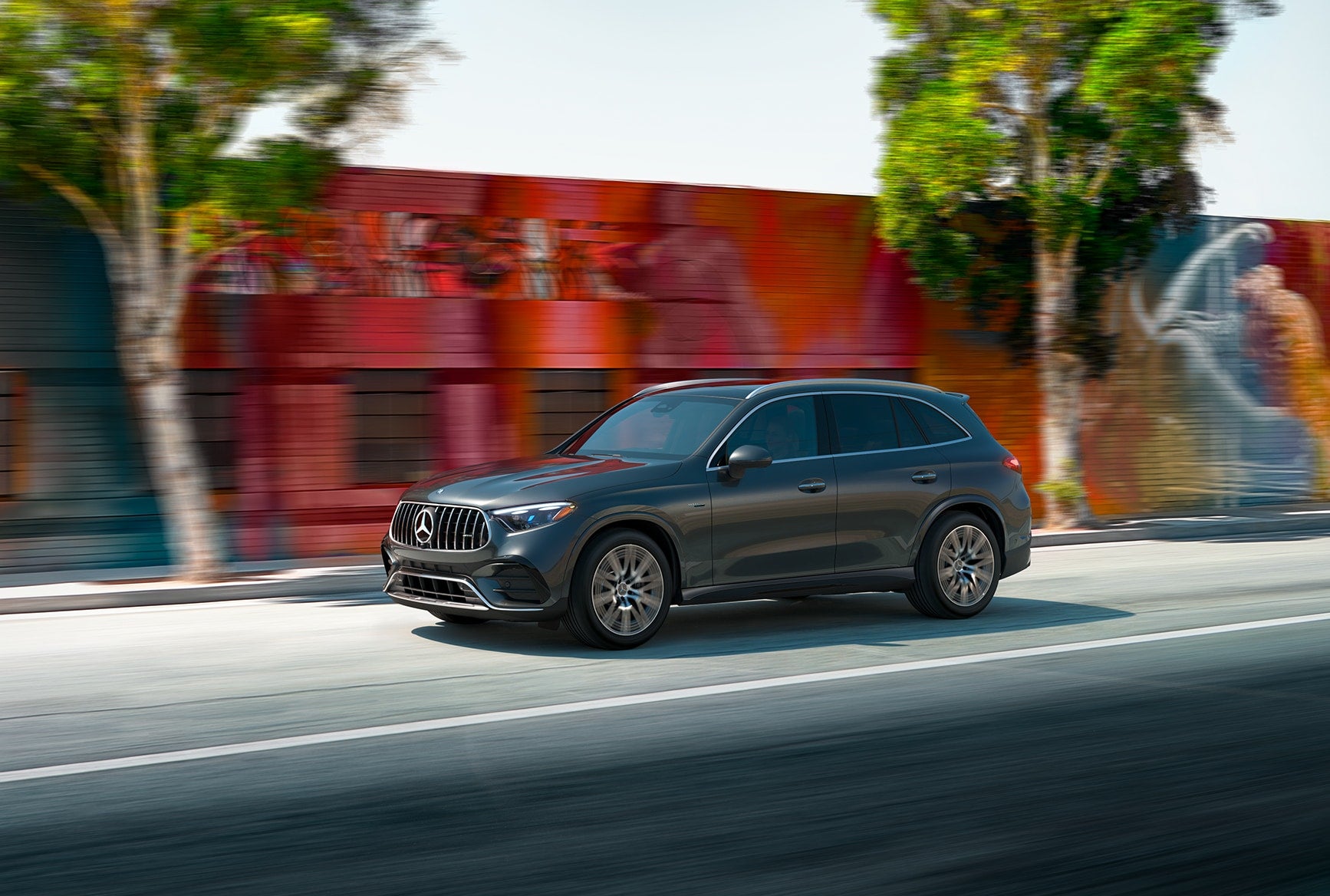
A Mercedes-Benz GLC cruises through the city, offering compact versatility for Chicagoland fall driving.

Mercedes-Benz GLE vs. GLC: Which SUV Fits Your Chicagoland Fall

Every Mercedes-Benz SUV shopper walking onto the Loeber Motors lot this fall eventually narrows the field to a version of the same question: the GLC that handles like the sedan it's built alongside, or the GLE that has the room a growing family or a loaded trunk actually needs. Both wear the three-pointed star. Both get 4MATIC® all-wheel drive. The difference comes down to scale. Check Out: Latest Mercedes GLC Inventory The GLC rides on a 113.1-inch wheelbase and stretches 185.7 inches overall, numbers that make it easy to park in a North Shore garage built decades before SUVs this size were common. Cargo space runs 21.9 cubic feet behind the rear seats, expanding to 56.3 cubic feet with those seats folded down. That's enough for a Costco run or a weekend bag for two, and for buyers whose SUV mostly handles the Edens Expressway commute and the occasional Fox River Valley day trip, it's rarely a limiting number. The GLE steps up in every dimension that matters to a bigger household. Its wheelbase runs to roughly 117.9 inches, and overall length reaches close to 194 inches, nearly a foot longer than the GLC. Cargo space starts at 22.25 cubic feet behind the standard second row, climbs to 29 cubic feet with the optional power-adjustable second row, and reaches 72.6 cubic feet with that row folded flat. For a family loading up for a Door County weekend or hauling gear for a season of youth sports out of a North Shore driveway, that difference between 56.3 and 72.6 cubic feet is the one that actually decides a purchase. Both SUVs get the new Mercedes-Benz Operating System, MB.OS, for 2027, which brings a faster, more capable version of MBUX to either dashboard along with an AI voice assistant that learns a driver's habits over time. Neither model gives up anything on the technology side to the other; the GLC's third-generation MBUX and the GLE's MB.OS run on comparably modern hardware, so a buyer choosing the smaller SUV isn't settling for an older infotainment experience. Read More: Why a Certified Pre-Owned Mercedes-Benz EQS Makes Perfect Sense in Chicagoland Where the two diverge again is in what's underneath. The GLC's core engine lineup centers on the GLC 300's turbocharged four-cylinder, tuned for the kind of daily efficiency that matters on a car doing five days a week of Chicagoland commuting. The GLE, particularly in its new AMG GLE 53e HYBRID form, brings a 3.0-liter turbocharged inline-six paired with an electric motor for a combined 577 horsepower and 553 lb-ft of torque, enough for a 4.4-second run to 60 mph in a vehicle that can also carry seven passengers when the optional third row is specified. That's a genuinely different kind of SUV than the GLC is trying to be, built for buyers who want a three-row family hauler that still drives like something with a Mercedes-AMG badge on it. 4MATIC® ties both SUVs together in a way that matters more once the Chicagoland forest preserves start losing their leaves. The system has been a core part of Mercedes-Benz engineering for more than 120 years, refined continuously since the 4MATIC® name itself arrived in 1985, and it stays continuously engaged rather than waiting for a wheel to slip before sending torque where it's needed. On both the GLC and GLE, 4MATIC® integrates directly with the standard Electronic Stability Program for what Mercedes-Benz describes as maximum effectiveness in corners and slippery conditions, though the system can't overcome the basic physics of standard all-season tires on packed snow. Mercedes-Benz is explicit on that point in its own published guidance: best performance in snow is obtained with winter tires, a detail Loeber Motors walks every 4MATIC® buyer through regardless of which body style they choose. Towing capability separates the two further for buyers heading toward a North Shore marina or up to a lake house for the season. The GLE's larger frame and available towing packages put real boat-and-trailer capability within reach in a way the GLC, built on a smaller platform, generally isn't intended to match. For a buyer who never tows anything heavier than a bike rack, that difference rarely factors into the decision at all. What ultimately separates a GLC buyer from a GLE buyer isn't badge snobbery or price alone, it's how much SUV a household actually needs to live with every day. Buyers commuting alone or as a couple, parking in tighter North Shore or Glencoe garages, and rarely filling the cargo area past a weekend's worth of luggage tend to find the GLC does everything they need without the extra length. Buyers hauling kids, gear, and the accumulated cargo of a full family life, particularly those eyeing the GLE's available third row, find the extra foot of length pays for itself the first time they need it. Loeber Motors keeps both SUVs on the lot specifically so that comparison happens behind the wheel rather than on a spec sheet, since a fifteen-minute back-to-back test drive tends to answer the size question faster than any cargo number can. Quick Answers Cargo Space (GLC): 21.9 cu ft behind rear seats / 56.3 cu ft folded Cargo Space (GLE): 22.25–29 cu ft behind rear seats / 72.6 cu ft folded Wheelbase: GLC 113.1 in / GLE approx. 117.9 in Overall Length: GLC 185.7 in / GLE approx. 194 in All-Wheel Drive: 4MATIC® standard across both lineups Frequently Asked Questions What's the main difference between the GLC and GLE? Size and capability. The GLE is nearly a foot longer than the GLC, with significantly more cargo room, an available third row, and stronger towing capability, while the GLC offers a more compact footprint for easier parking and daily driving. Does the GLE offer a third row of seating? Yes, an optional third row is available on the GLE, expanding seating from five to seven, something the GLC's smaller platform doesn't offer. Is 4MATIC® all-wheel drive standard on both SUVs? 4MATIC® is available across the GLC and GLE lineups and integrates with the standard Electronic Stability Program. Mercedes-Benz recommends winter tires for the best performance in snow and ice regardless of trim. Which SUV is better for towing? The GLE generally offers stronger towing capability thanks to its larger platform and available towing packages, making it the better choice for buyers hauling a boat or trailer. Do the GLC and GLE share the same technology? Both get the new Mercedes-Benz Operating System (MB.OS) for 2027, with comparably modern MBUX infotainment and AI voice assistant capability across either model. Expert Summary Choosing between the Mercedes-Benz GLC and GLE comes down to how much SUV a household genuinely needs, not which one carries more prestige. Both share 4MATIC® all-wheel drive and the new MB.OS infotainment platform for 2027, so neither buyer is settling for less technology. The real split is cargo room, seating, and towing: the GLC's tighter footprint suits daily Chicagoland driving and easier parking, while the GLE's extra length, available third row, and stronger towing capability serve families and buyers who regularly load the SUV to its limits. Loeber Motors keeps both on the lot specifically so that decision can be made behind the wheel.


Two men speaking on stage at a 50th anniversary celebration.

Loeber Motors Proudly Sponsors the Lincolnwood Chamber Orchestra’s September Performances

Loeber Motors was proud to sponsor the Lincolnwood Chamber Orchestra for two wonderful September performances: Poland Remembered and iOlé! We're grateful to support the arts and help bring exceptional music and inspiring performances to our Chicago community.

Mercedes-Benz SUV with 4MATIC® all-wheel drive preparing for Chicagoland winter driving

4MATIC® All-Wheel Drive: Why Fall Is the Time to Prepare for Chicagoland Winter

Every Mercedes-Benz buyer who waits until the first snowfall to think about winter traction has already missed the easier part of that decision. Fall, while the Edens Expressway is still dry and the North Shore forest preserves are still turning color, is when a 4MATIC® purchase or a winter tire order actually has time to matter before conditions demand it. 4MATIC® isn't a new idea Mercedes-Benz rushed to market to compete with the moment. All-wheel drive has been part of the brand's engineering tradition for more than 120 years, and the 4MATIC® name itself has carried that tradition since 1985, refined across four decades to meet what Mercedes-Benz describes as the highest standards for driving stability, safety, and dynamic performance. The system stays continuously engaged rather than activating only after a wheel starts to slip, and it integrates directly with the standard Electronic Stability Program for what the brand calls maximum effectiveness in corners and slippery conditions. Read More: Why a Certified Pre-Owned Mercedes-Benz EQS Makes Perfect Sense in Chicagoland That continuous engagement is the detail that separates 4MATIC® from the reactive all-wheel-drive systems that dominated the segment a generation ago. On a hard freeze followed by a fast melt, the kind of Chicagoland pattern that turns a Winnetka side street into a mix of packed snow, standing water, and black ice by the time evening commuters are heading home, a system that's already distributing torque before a wheel loses grip responds differently than one still waiting for a sensor to detect a slip already underway. None of that changes one fact Mercedes-Benz states plainly in its own published guidance: 4MATIC® cannot overcome the laws of physics, and best performance in snow is obtained with winter tires. The GLC 300, like most SUVs in the lineup, ships standard with 19-inch all-season wheels explicitly not designed for snow and ice. That's not a limitation unique to Mercedes-Benz. It's simply the tradeoff every all-season tire makes for year-round comfort and tread life, and it's the reason Loeber Motors treats a 4MATIC® test drive and a winter tire conversation as two parts of the same appointment rather than separate decisions. Fall is the ideal window for that second half of the conversation precisely because it isn't urgent yet. A winter tire and wheel package ordered in September or October arrives and gets mounted before the first hard freeze, rather than during the week Chicagoland's tire shops are booked solid because everyone waited for the same storm to make the decision for them. The same logic applies to scheduling a 4MATIC® test drive itself: a dry October afternoon shows a buyer how the car handles day to day, while a conversation about what 4MATIC® does and doesn't solve for happens without the pressure of black ice already on the road that morning. Check Out: Latest Mercedes GLC Inventory 4MATIC®'s reach across the current Mercedes-Benz SUV and sedan lineup means the decision isn't really about which specific model to buy, it's about which trim within a model to choose. Both the GLC and GLE offer 4MATIC® across their range, as do the brand's sedans, which means a Chicagoland buyer cross-shopping a rear-wheel-drive GLC 300 against a GLC 300 4MATIC® is deciding how much winter capability to build into a car they'll be driving through at least one North Shore winter before the next model year arrives. For most buyers planning to keep a car through more than a single Chicagoland winter, that decision resolves itself quickly. There's a practical timing benefit specific to fall shopping, too. Dealership inventory tends to be deepest heading into the fourth quarter, before winter storms start affecting delivery logistics and before the models a buyer wants most get thinned out by other shoppers making the same seasonal calculation. A 4MATIC® GLE or GLC ordered or selected off the lot in October is a car with time to get winter tires mounted, a driver acclimated to how the all-wheel-drive system behaves, and a first snow that arrives as a routine commute rather than a surprise. That's the case for treating fall as the real start of winter-prep season rather than late November. The mechanical advantage 4MATIC® provides doesn't change based on the calendar, but a buyer's ability to prepare around it does. Loeber Motors keeps 4MATIC®-equipped models across the GLC and GLE lineups on the lot through the fall specifically so that preparation, tire package included, can happen on a dry afternoon rather than a snowy one. Quick Answers 4MATIC® Introduced: 1985, with an all-wheel-drive tradition dating back more than 120 years Availability: Standard or available across GLC, GLE, and other Mercedes-Benz SUV and sedan trims Best Winter Performance: Requires winter tires per Mercedes-Benz's own guidance Standard GLC Tires: 19-inch all-season, not designed for snow and ice Best Time to Prepare: Fall, before dealership tire demand peaks and storms begin Frequently Asked Questions What does 4MATIC® actually do? 4MATIC® is Mercedes-Benz's all-wheel-drive system, continuously engaged and integrated with the standard Electronic Stability Program to optimize torque distribution in corners and slippery conditions. Does 4MATIC® mean winter tires aren't necessary? No. Mercedes-Benz states directly that best performance in snow is obtained with winter tires, since 4MATIC® cannot overcome the physical limits of a standard all-season tire on ice or packed snow. Which Mercedes-Benz models offer 4MATIC®? 4MATIC® is available across the GLC and GLE SUV lineups, along with other Mercedes-Benz sedans and SUVs, giving Chicagoland buyers a range of models to choose from with all-wheel-drive capability. Why should winter tires be ordered in the fall instead of winter? Ordering ahead of the season avoids the scheduling backlog that hits tire shops after the first major storm, and allows a buyer to get acclimated to a 4MATIC® vehicle's handling before winter conditions actually arrive. Is 4MATIC® standard or optional? It varies by trim. Some GLC and GLE trims offer 4MATIC® as standard equipment, while others list it as an available option, making it worth confirming trim-by-trim with a Loeber Motors sales advisor. Expert Summary 4MATIC®'s real advantage over a generation of reactive all-wheel-drive systems is that it stays continuously engaged rather than waiting for a wheel to lose grip, a distinction that matters most on the mixed snow, ice, and standing water that define a Chicagoland freeze-thaw cycle. Mercedes-Benz is direct about the system's limits, recommending winter tires for genuine snow performance regardless of drivetrain. Fall is the window where that full preparation, a 4MATIC®-equipped model paired with a proper winter tire package, can happen without the urgency of an active storm forcing the decision. Loeber Motors treats that pairing as a single conversation rather than two separate ones, timed specifically to the season when buyers still have the luxury of planning ahead.