
Mercedes-Benz
of Lincolnwood

Blog / Loeber Motors - Mercedes-Benz

A New Chapter for an Icon: The New Mercedes “Baby G-Class” is a Smaller G-Wagen With Big Ambitions

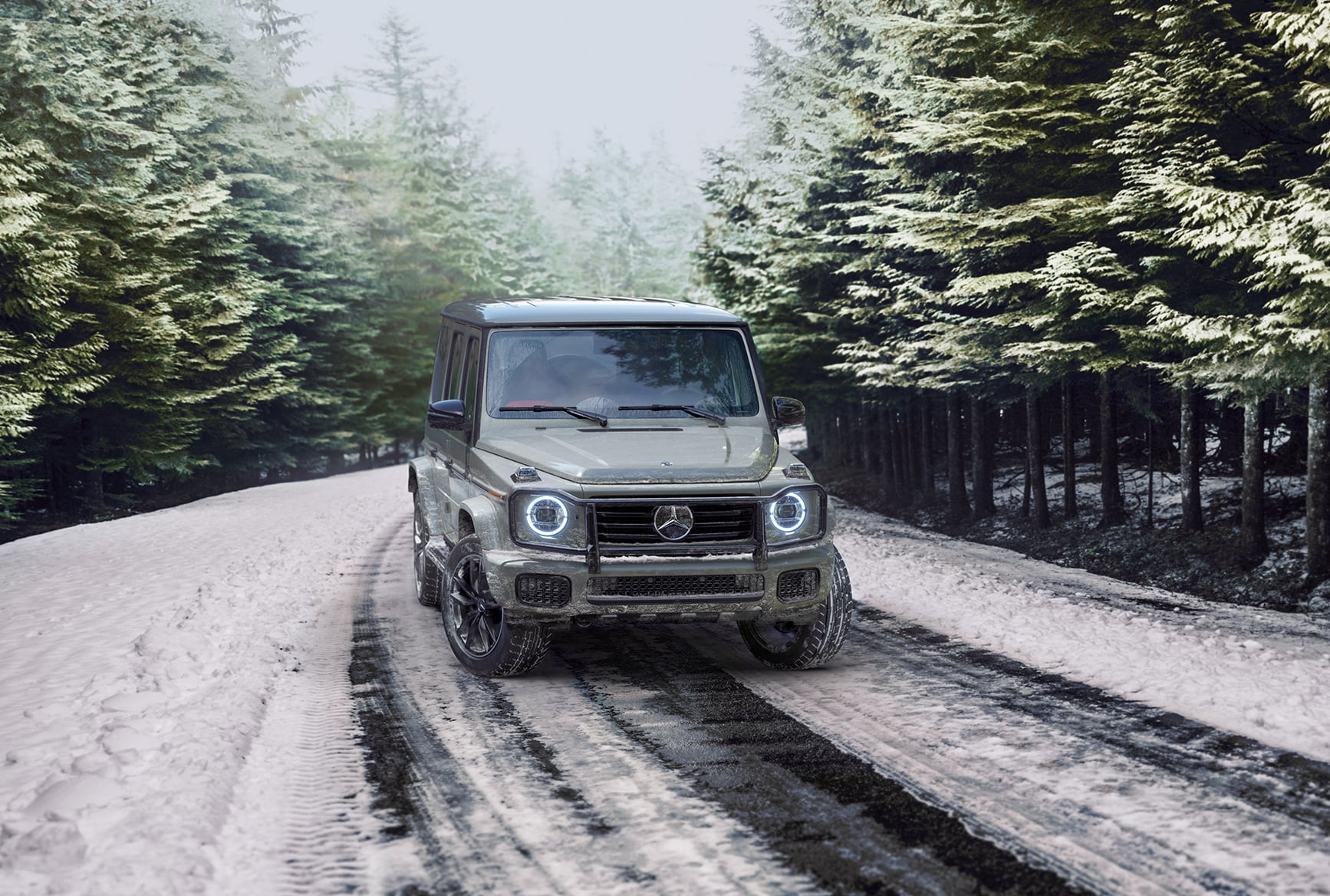
New Mercedes Baby G-Class driving off-road, showcasing the smaller G-Wagen’s rugged capability and big ambitions.

For more than four decades, the Mercedes-Benz G-Class has stood at the crossroads of rugged capability and high luxury.

It is one of the rare vehicles whose shape alone carries instant recognition: upright windshield, squared-off body, exposed hinges, and the spare tire mounted proudly on the tailgate. But the world has changed dramatically since the G-Class debuted.

Cities have grown denser, EV adoption has accelerated, and a younger generation of drivers is seeking adventurous design in smaller, more manageable footprints. Against this backdrop, Mercedes is preparing to expand the G-Class lineage with an all-new Baby G-Class—a shrunken, electric-first reinterpretation that maintains the visual authority of the original while aiming for a broader audience.

A Familiar Shape, Perfectly Scaled Down

Spy images have revealed a prototype that looks less like a reinterpretation and more like a direct descendant. The Baby G mirrors the full-size G-Wagen’s proportions so closely that at a glance, the two vehicles could be confused. The upright stance, gentle roof taper, squared wheel arches, side-hinged tailgate, and iconic rear-mounted spare wheel all reappear in near-perfect miniature.

Nothing about the shape suggests compromise or dilution. Mercedes understands the power of the G-Class silhouette and appears determined to keep it intact. Shrinking the G-Wagen without softening its edges is not a small design feat. Yet from every angle, the Baby G reads as authentically G-Class—simply repackaged for modern urban life.

Electric First: A Bold but Logical Move

The Baby G is expected to debut with an electric powertrain, a decision reflected in the prototype’s closed-off grille and lack of traditional cooling openings. This move aligns with global regulatory pressure, Mercedes’ long-term electrification strategy, and the rapidly expanding compact EV market.

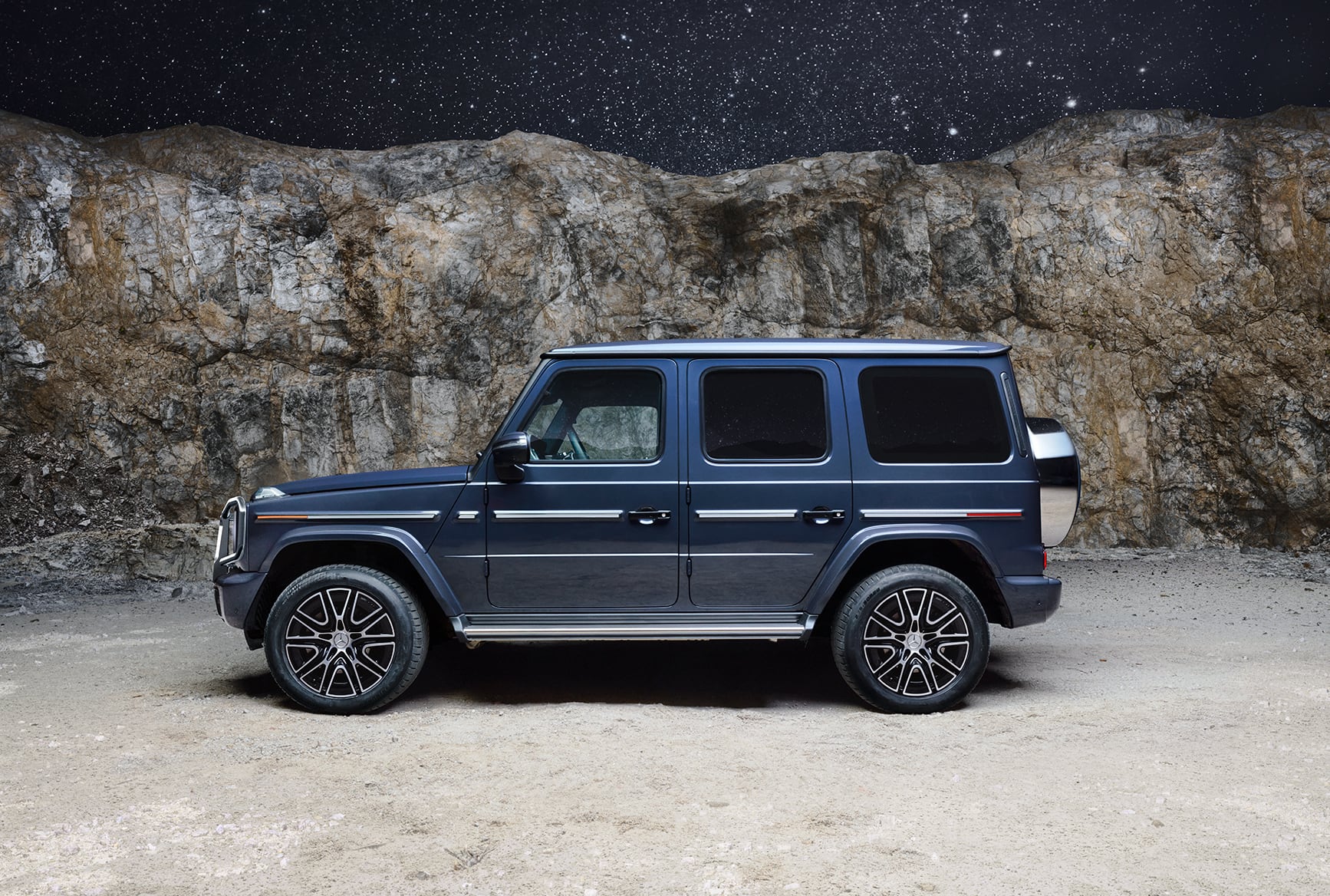
Blue Mercedes Baby G-Class driving uphill in a city, highlighting the compact G-Wagen’s agility and bold new chapter.
A glimpse of the new Baby G-Class navigating steep urban streets—Mercedes’ iconic design reimagined in a compact, modern G-Wagen.

Launching a rugged EV with G-Class identity is a calculated risk. Off-road-capable electric vehicles face inherent challenges, from weight management to energy draw during difficult terrain. Yet the advantage is equally clear: instant torque, near-silent operation, and the ability to package motors for optimal traction. Mercedes appears confident that the Baby G can merge its heritage with the realities of an electrified future. And if the larger electric G-Class is any indicator, the brand is fully prepared to use software-driven systems to enhance off-road performance in ways combustion engines cannot.

Read About:2026 Mercedes-Benz Sprinter

A Smaller Ladder-Style Platform With Real Capability

One of the most surprising revelations is that the Baby G reportedly uses a downsized ladder-style chassis rather than a conventional crossover unibody.

This decision places it in rare company, especially among EVs. Ladder frames are typically reserved for full-size trucks and serious off-roaders, where durability and articulation take precedence over lightweight efficiency. Applying the same philosophy to a compact SUV signals that Mercedes intends the Baby G to be more than a soft-roader wearing a G-Class costume.

The engineering challenge is substantial. Batteries are heavy, and off-road hardware adds even more mass. But a ladder-style platform could give the Baby G the structural backbone it needs to offer genuine capability instead of merely imitating it. It positions the vehicle closer to the ethos of the original G-Class—a machine designed to withstand demanding conditions without sacrificing refinement.

Positioning the Baby G for a New Generation of Drivers

The appeal of the Baby G is straightforward but powerful.

Buyers love the G-Wagen’s look, attitude, and heritage, but the full-size model is large, expensive, and not always practical for tight urban environments. The Baby G creates an entry point for those who want the iconography without the mass or price tag. It presents itself to three prime audiences.

First, urban buyers who adore the G-Class aesthetic but hesitate over its scale now have a version purpose-built for cities.

Second, younger luxury buyers—those drawn to expressive design and lifestyle branding—gain access to one of Mercedes’ most charismatic nameplates.

Aerial view of the Mercedes Baby G-Class showing its compact footprint and iconic G-Wagen shape.
A striking top-down view emphasizes the stronger, tighter proportions of the new Baby G-Class—smaller in size, big in presence

And third, adventure-oriented drivers who want legitimate off-road attitude without committing to a massive SUV find a vehicle that bridges that gap.

In many ways, the Baby G represents a democratization of G-Class identity, extending it beyond its current niche without diluting its design DNA.

Meet Now: The Mini G-Wagen

Interior Expectations and the Tech Landscape

Mercedes has not revealed interior images, but its design trajectory offers strong clues.

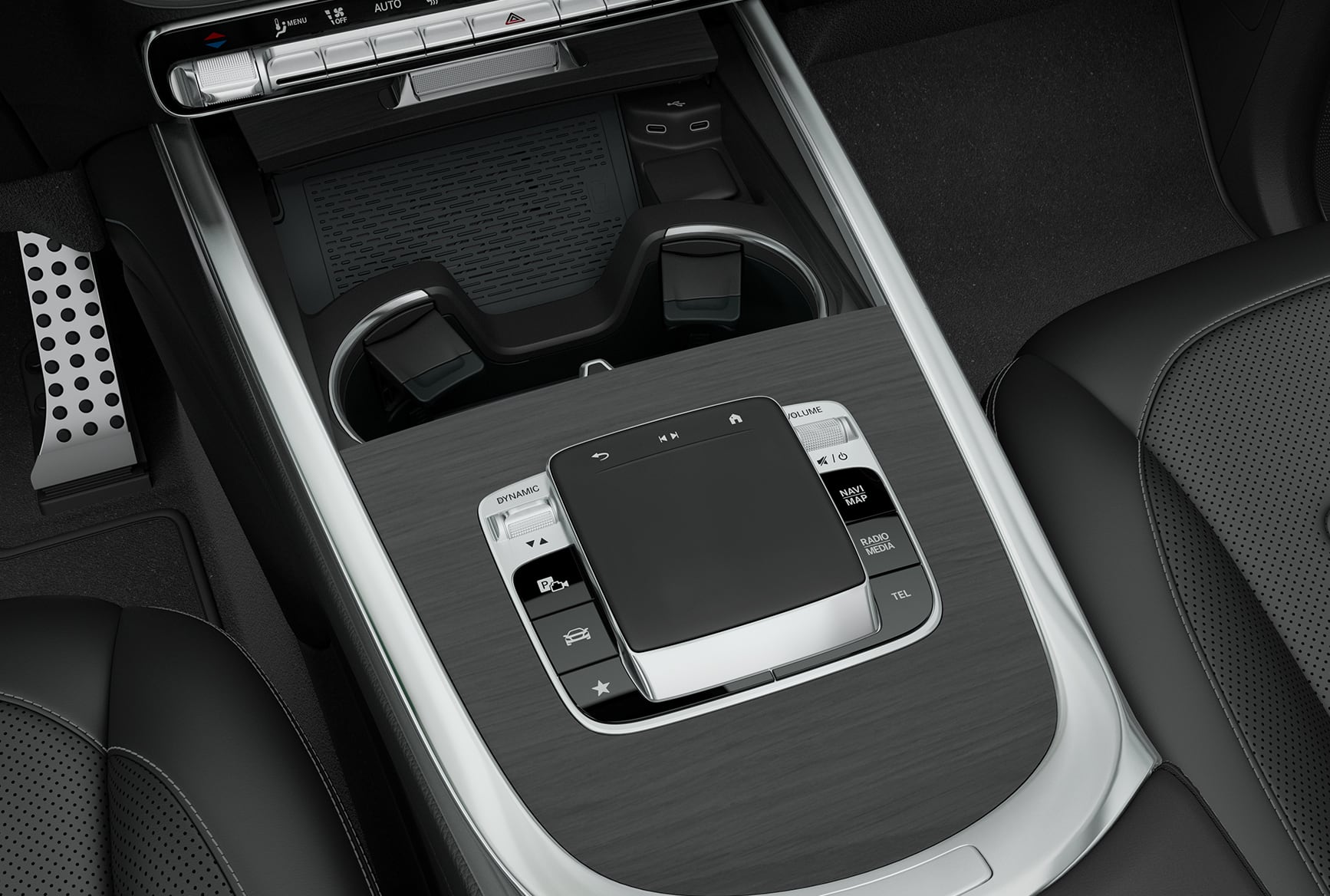
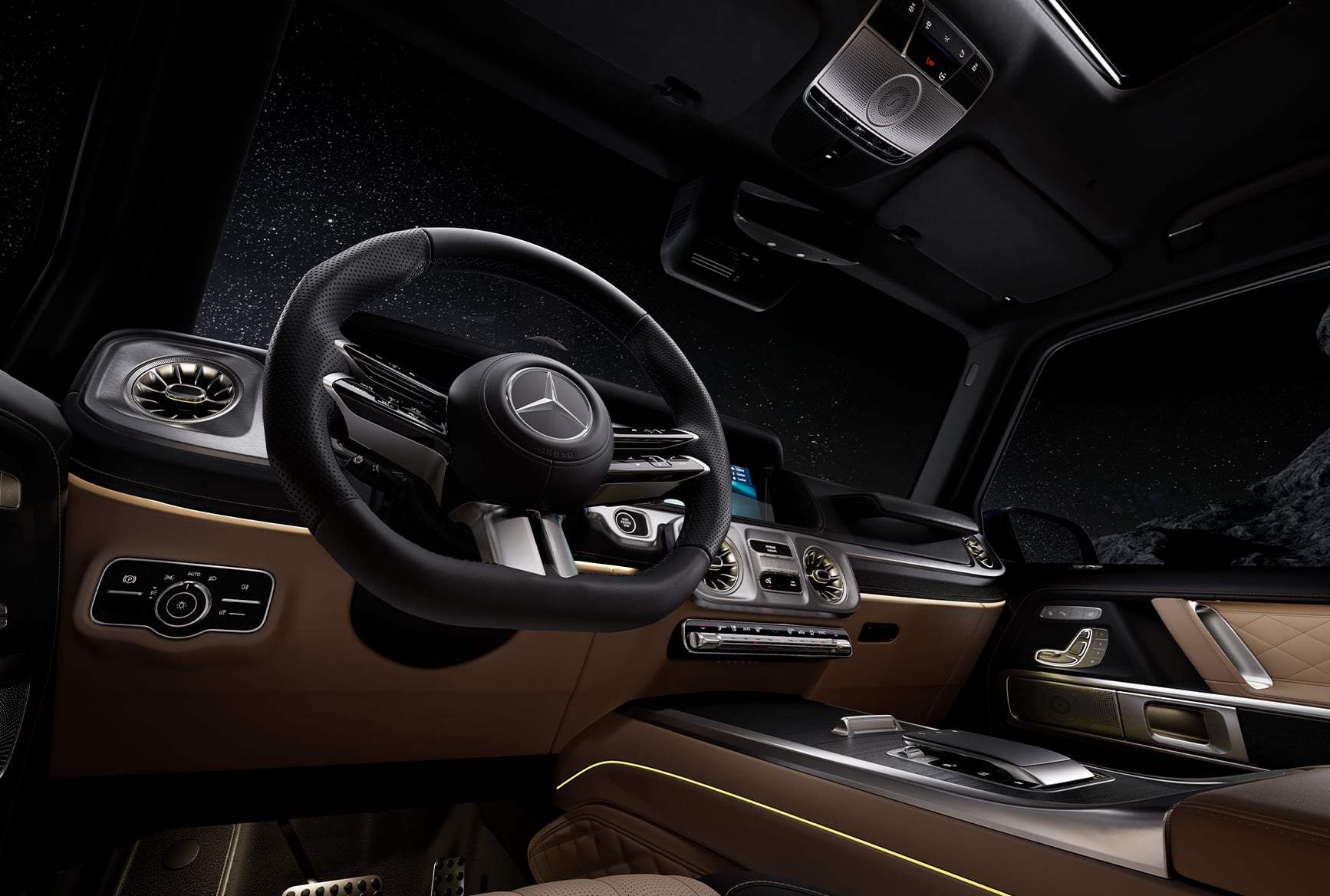
Expect a compact interpretation of the current G-Class cabin: the dual-screen panoramic cockpit, upright dashboard, turbine-style vents, and robust switchgear. Electric packaging may free up cabin and cargo space, particularly through the elimination of a traditional transmission tunnel.

Interior display of the new Mercedes Baby G-Class featuring drive modes, revealing the compact G-Wagen’s modern technology.
Inside the Baby G-Class, Mercedes blends classic G-Wagen ruggedness with advanced driving modes and modern digital tech.

The interior is also likely to take creative liberties with materials and color treatments, appealing to a more youthful demographic than the traditional G-Class buyer. Technology will play a central role, especially as software-driven off-road features expand across the Mercedes lineup. Intelligent torque vectoring, terrain-select modes, and potentially even scaled-down versions of features like the electric G-Class’s “G-Turn” could appear in some form. Innovation might be the very trait that distinguishes the Baby G from its full-size sibling.

The Heritage Context and Why This Model Matters

Expanding the G-Class lineup is not a casual maneuver.

The G-Wagen has become one of the most recognizable luxury vehicles in the world. Any addition must respect the heritage while advancing the brand’s strategy. The Baby G fits a growing trend in the industry: heritage-inspired vehicles redesigned for broader accessibility.

Consumers want adventure-ready styling without committing to oversized platforms. The Baby G answers precisely that call. If executed well, it could become the entry point to a new multi-tier G-Class family—one that spans compact EVs, larger luxury flagships, and everything in between. It would mark a major evolution in how Mercedes structures its SUV strategy.

Will the Baby G-Class Be a Success?

Everything suggests there is significant potential for the Baby G to become one of Mercedes’ most important launches of the decade.

Demand for compact luxury SUVs continues to rise. Heritage styling remains in vogue.

Electrification is expanding, especially among younger buyers who value design, tech, and sustainability as much as performance. The aesthetic of the full-size G-Wagen has proven it can transcend segments, cultures, and trends. If Mercedes manages to retain the G-Class attitude, deliver competent off-road performance, and keep pricing in a more accessible range, the Baby G could become an immediate hit.

Close-up of Mercedes-Benz grille symbolizing the Baby G-Class design ethic and the new chapter for the iconic G-Wagen.
The iconic Mercedes-Benz emblem sets the tone for the Baby G-Class—a smaller G-Wagen carrying forward a legendary legacy.

Even skeptics who question the viability of electric off-roaders acknowledge the appeal of the Baby G silhouette and its potential to attract a broader, more diverse customer base.

A Compact Icon in the Making

The Baby G-Class is far more than a scaled-down SUV. It represents an evolution in how Mercedes interprets one of its most storied vehicles.

It carries forward the unmistakable silhouette, embraces the future with electric power, and positions itself for an emerging generation of drivers who admire authenticity but demand modern practicality.

The prototype sightings are only the beginning, but they tell a clear story: this is not a token addition to the lineup. It is a thoughtful extension of one of the most revered automotive nameplates in the world.

If the Baby G-Class arrives with the presence, capability, and design integrity that the early images suggest, it could become a defining luxury model of the late 2020s—compact in size, but massive in cultural impact.

Posted in:

Related Posts

Blue new Mercedes-Benz CLA Electric driving through a tunnel, previewing the EV coming soon for Chicago drivers.

The New Mercedes-Benz CLA Electric Is Coming Soon — Here’s What Chicago Drivers Should Know

There are moments in a brand’s history when evolution becomes visible. Not in a dramatic, overnight way, but in a steady, confident shift toward what comes next. For Mercedes-Benz, the upcoming CLA Electric represents exactly that kind of moment. It isn’t simply a new model. It’s the next chapter of a nameplate that has long served as the gateway into Mercedes design, engineering, and technology. And for Chicago-area drivers watching the electric transition carefully, this one matters. more The CLA has always held a specific role in the Mercedes lineup. It combines compact proportions with sculpted styling, blending coupe-inspired lines with everyday practicality. It attracts drivers who want elegance without excess and technology without overwhelming size. The electric version preserves that spirit but introduces a completely new architecture designed from the ground up for battery-electric performance. Rather than adapting an existing gasoline platform, Mercedes has built this vehicle to showcase what its next-generation EV systems can deliver. For drivers in the Midwest, the upcoming CLA Electric represents a different kind of luxury EV. It will not be oversized or experimental in appearance. Instead, it remains refined and proportional, built to integrate seamlessly into daily life. The design language is expected to carry Mercedes’ latest lighting signatures, aerodynamic refinement, and a sleek profile that prioritizes efficiency as much as aesthetics. Early previews show a focus on streamlined surfaces, illuminated grille treatments, and a more sculptural interpretation of the familiar CLA silhouette. Underneath, the new CLA Electric is expected to introduce Mercedes’ next-generation electric drivetrain technology. A first look at the new Mercedes-Benz CLA Electric coming soon—what Chicago drivers should know about everyday range and road presence. This platform is designed to maximize range, efficiency, and charging performance, positioning the CLA Electric as one of the most forward-looking compact luxury EVs in its segment. For Chicago drivers, range matters not just for long-distance travel but for winter confidence. Cold-weather performance is a frequent concern among EV shoppers, and Mercedes’ ongoing development of battery management systems aims to maintain efficiency even in colder climates. The interior is where the CLA Electric is likely to make its strongest impression. Mercedes has consistently led the segment in digital interface design, and the upcoming CLA Electric is expected to build on that foundation. The next-generation MBUX system will likely incorporate more intuitive voice recognition, expanded artificial intelligence integration, and cleaner screen architecture. Learn About: Choosing the Right Size Without Second-Guessing For urban drivers navigating traffic along Lake Shore Drive or managing complex routes through downtown, intuitive technology becomes more than a feature — it becomes essential. While final U.S. specifications will be released closer to launch, early information indicates that Mercedes is focusing heavily on aerodynamic efficiency, lightweight construction, and advanced battery density to extend real-world range. Charging capability is also expected to improve, with faster DC charging times and optimized energy recovery systems. For buyers evaluating electric options, these advancements make the CLA Electric a meaningful addition to the segment rather than simply another entrant. Inside the new Mercedes-Benz CLA Electric coming soon: a tech-forward cabin Chicago drivers should know for commuting and navigation. Importantly, the CLA Electric signals where Mercedes is heading in the second half of this decade. It represents a refinement of their EV philosophy — not radical reinvention, but intelligent progression. Chicago-area buyers tend to approach EV adoption thoughtfully. They consider infrastructure, winter usability, and resale value. The CLA Electric is designed to answer those questions with engineering, not marketing. There is also the matter of positioning. The CLA has historically been an entry point into Mercedes ownership, and the electric version will likely continue that tradition. That makes it especially significant for first-time luxury buyers who want to move into the Mercedes ecosystem through an EV rather than a traditional combustion model. It lowers the barrier to entry without lowering the brand’s standards. Side profile of the new Mercedes-Benz CLA Electric coming soon—a streamlined silhouette that Chicago drivers should know Check Out: How Full-Size SUV Shoppers Actually Decide As production approaches, more detailed specifications — including range estimates, drivetrain configurations, and pricing — will be announced for the U.S. market. Until then, what can be said with confidence is that the new CLA Electric will carry forward Mercedes’ commitment to blending design, efficiency, and digital sophistication into a compact luxury form. For drivers in the Chicago area watching the next phase of Mercedes-Benz electrification unfold, this is a model worth paying attention to. It is not oversized. It is not experimental for the sake of novelty. It is a carefully considered evolution of a nameplate that already resonates with urban luxury buyers. Those interested in learning more about the upcoming Mercedes-Benz CLA Electric can stay connected Loeber Motors for updates on availability, U.S. specifications, and ordering information as details are released.

Front view of the 2026 Mercedes-Benz GLE, highlighting exterior styling compared with Audi Q7, Audi Q8, and Lexus luxury SUVs.

2026 Mercedes-Benz GLE vs Audi Q7, Q8, and Lexus: How People Actually Choose

If you’re comparing the 2026 Mercedes-Benz GLE to vehicles like the Audi Q7, Q8, or Lexus alternatives, you’re probably not starting with specs. You’re starting with a feeling. You’re trying to picture which SUV fits the way you actually live, not the way brochures describe. more Latest Mercedes GLE Inventory This is what matters most, because the differences between these vehicles show up over time, not in a single test drive. The Mercedes-Benz GLE is often chosen by people who want their SUV to feel calm and capable rather than showy. It prioritizes ride comfort, interior refinement, and intuitive technology. The experience is designed to reduce friction in everyday driving, whether that’s commuting, errands, or longer trips. For many buyers, this sense of ease becomes the defining factor. Inside the 2026 Mercedes-Benz GLE, where comfort and materials influence real-world decisions against Audi and Lexus rivals. The Audi Q7 tends to appeal to drivers who value sharp design and a more tech-forward aesthetic. The Q7 feels modern and structured, with an emphasis on digital interfaces and crisp presentation. Some buyers love that clarity. Others find it a bit clinical over time, especially when comfort becomes more important than novelty. Check Out: 2026 Mercedes-Benz E-Class The Audi Q8 shifts the conversation toward style. The Q8's coupe-like profile and bold stance attract buyers who want visual presence. The trade-off often comes in interior flexibility, which may or may not matter depending on how the vehicle is used. For drivers who prioritize design over cargo or rear-seat space, the Q8 makes sense. For those who need versatility, it can feel limiting. Lexus alternatives often enter the conversation for buyers focused on reliability and long-term ownership. Lexus SUVs tend to emphasize smoothness and predictability, sometimes at the expense of engagement. They are often chosen by buyers who want reassurance above all else. The GLE, by contrast, tends to appeal to those who want comfort without giving up a sense of responsiveness. The 2026 Mercedes-Benz GLE balances luxury and practicality, a common reason buyers choose it over the Audi Q7, Q8, or Lexus. What makes the GLE especially compelling right now is availability. With a strong selection of models at Loeber Motors, buyers can compare trims, drivetrains, and configurations without waiting months or compromising on preferences. Browsing current GLE inventory allows shoppers to move from comparison to decision while the options are actually on the ground. The true comparison often comes from imagining daily scenarios. Check Out: Why the 2026 Mercedes-Benz GLC EV Is Perfect for Chicago Driving How does the vehicle feel at the end of a long day? How intuitive is the technology when you’re not in the mood to learn something new? How does it handle winter mornings, road trips, or carrying passengers who expect comfort rather than excitement? The GLE tends to win these moments quietly. It doesn’t demand attention. It earns trust over time. That’s why many buyers who test multiple SUVs end up returning to it—not because it was the most dramatic, but because it felt the easiest to live with. A full look inside the 2026 Mercedes-Benz GLE shows how technology and space factor into GLE vs Audi Q7, Q8, and Lexus comparisons. Six features that distinguish the 2026 Mercedes-Benz GLE Balanced ride quality focused on comfort and confidence Intuitive interior technology designed for daily use Flexible configurations suited to families and commuters Refined powertrain options with smooth delivery Strong availability and selection at LOEBER Mercedes A luxury experience that prioritizes ease over spectacle For buyers deciding between the GLE and its competitors, spending time with the vehicle at Loeber Motors often clarifies the decision faster than comparisons alone. Key Takeaways The 2026 Mercedes-Benz GLE is designed for buyers who prioritize ease, comfort, and confidence over visual drama or spec-sheet competition. Compared with the Audi Q7 and Q8, the GLE delivers a calmer, more intuitive driving experience that feels less tech-driven and more livable over time. While Lexus alternatives emphasize reliability and predictability, the GLE balances long-term reassurance with a greater sense of responsiveness and refinement. Availability plays a meaningful role in the decision process, and the strong selection at Loeber Motors allows buyers to choose the right configuration without delay or compromise. In daily life—commutes, errands, road trips, and end-of-day driving—the GLE tends to stand out by reducing friction and quietly earning trust rather than demanding attention.

2026 Mercedes-Benz GLC exterior shown in a size comparison context against BMW X3, Audi Q5, and Volvo XC60

2026 Mercedes-Benz GLC vs BMW X3, Audi Q5, and Volvo: Choosing the Right Size Without Second-Guessing

If you’re shopping the 2026 Mercedes-Benz GLC against the BMW X3, Audi Q5, or a smaller Volvo SUV, you’re probably trying to answer one deceptively simple question: Is this enough vehicle for my life right now—and for what’s coming next? This category attracts buyers who don’t want excess. more You want luxury, technology, and confidence, but you don’t want to feel like you’re driving something bigger than your needs. The challenge is that these vehicles can feel very similar on paper while feeling very different over time. GLC Inventory for Sale The Mercedes-Benz GLC tends to appeal to buyers who want balance. Front view of the 2026 Mercedes-Benz GLC highlights its confident stance in the competitive luxury compact SUV segment. It doesn’t shout. It doesn’t overwhelm. It feels considered. Ride quality leans toward comfort rather than sharpness, which becomes increasingly important once the novelty of a new vehicle wears off. For many drivers, this sense of ease becomes the deciding factor. The BMW X3 often attracts buyers looking for engagement and responsiveness. It feels agile and driver-focused, which can be appealing early on. Over time, some drivers find that the firmer ride and sport-oriented tuning aren’t what they want for daily life, especially on rough roads or long commutes. The Audi Q5 emphasizes design and digital presentation. Its interior feels clean and modern, and some buyers love that clarity. Others find that the experience becomes more about interacting with screens than enjoying the drive. This difference tends to show up after weeks or months, not minutes. Volvo’s smaller SUVs enter the conversation for buyers who value safety and Scandinavian simplicity. They are often chosen by people who want reassurance and restraint. What they don’t always provide is the sense of refinement and flexibility that comes from Mercedes’ long experience in this segment. Engagement in this decision often happens when buyers imagine everyday scenarios. Parking garages. Grocery runs. Weekend trips. Winter mornings. The GLC fits into these moments without asking for adjustments. It feels easy to live with, which is often the most underrated quality in a luxury SUV. Interior comfort and seat design in the 2026 Mercedes-Benz GLC play a key role when choosing between the GLC, BMW X3, Audi Q5, and Volvo XC60. Interior comfort plays a major role here. The GLC cabin feels inviting rather than clinical. Materials feel substantial, controls feel intuitive, and the overall environment encourages relaxation rather than stimulation. For drivers who spend real time behind the wheel, this matters more than performance numbers. Availability again becomes a quiet driver of engagement. Shoppers browsing GLC inventory at Loeber Motors can compare trims and configurations in real time, making it easier to choose a vehicle that fits without delay or compromise. Driving the GLC reinforces its positioning. Driving the 2026 Mercedes-Benz GLC reinforces its positioning as a well-sized alternative to the BMW X3, Audi Q5, and Volvo XC60. Steering is predictable, acceleration is smooth, and the vehicle feels composed in traffic and on the highway. It doesn’t try to impress. It tries to support, which is why many buyers end up feeling confident in their choice long after purchase. The most common realization among GLC owners is that they didn’t need more vehicle—they needed the right one. That realization is where engagement turns into satisfaction. Six features that define the 2026 Mercedes-Benz GLC Balanced size ideal for daily driving and flexibility Comfort-focused ride quality for long-term ownership Intuitive interior design with premium materials Advanced safety and driver-assistance systems Strong availability at LOEBER Mercedes A luxury SUV that fits real life without excess For buyers deciding among compact luxury SUVs, experiencing the GLC at Loeber Motors often turns uncertainty into confidence. Key Takeaways The 2026 Mercedes-Benz GLC is ideal for buyers who want luxury and confidence without excess, striking a balance between comfort, technology, and everyday usability. Compared with the BMW X3, the GLC prioritizes ride comfort and long-term ease over sporty tuning, making it better suited for daily driving, rough roads, and longer commutes. Against the Audi Q5, the GLC offers a more intuitive, less screen-centric experience that feels calming rather than demanding as time goes on. While Volvo’s smaller SUVs emphasize safety and restraint, the GLC delivers a higher level of interior refinement and flexibility that supports a wider range of real-life needs. With strong availability at Loeber Mercedes, buyers can select the right GLC configuration without waiting or second-guessing, turning the right-size decision into long-term satisfaction.