
Mercedes-Benz
of Lincolnwood

Blog / Luxury Cars

The Mercedes-AMG CLE 646 Spezialanfertigung: Built to Exist, Not to Sell

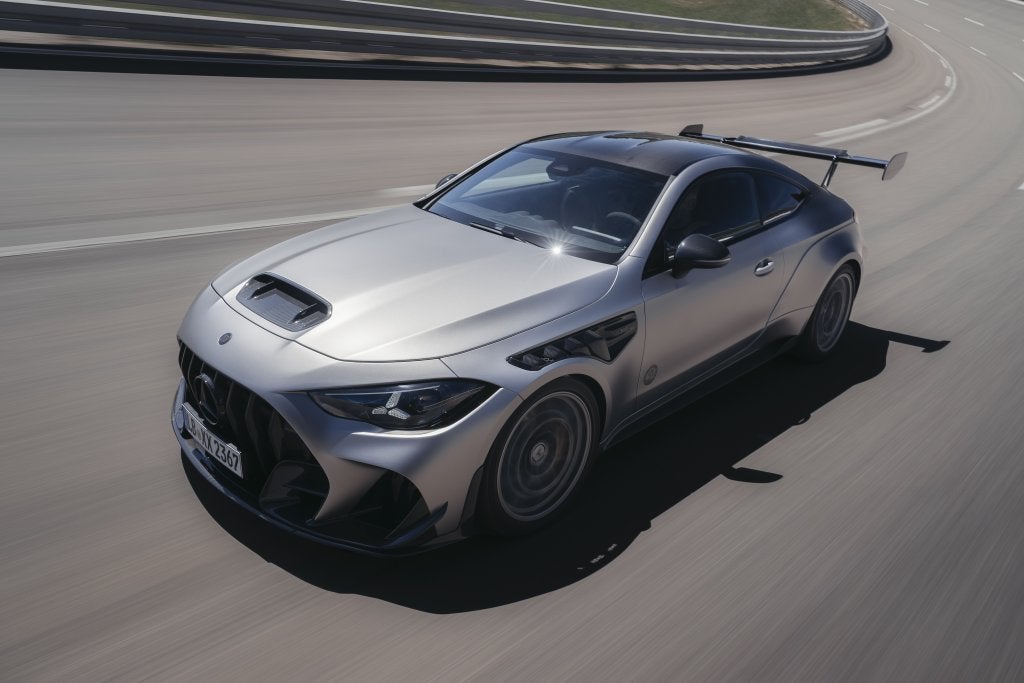
Mercedes-AMG CLE 646 Spezialanfertigung driving on a track with a hood vent and fixed rear wing.

Thirty cars. That is the entire production run of the Mercedes-AMG CLE 646 Spezialanfertigung, and Mercedes-Benz sold every one of them before the car had made a single public appearance.


The order book closed ahead of the September 10 world premiere, when the CLE 646 arrived as the second model in the Mercedes-Benz Mythos Series — a program built for a customer who already owns the fast car and wants something the rest of the world can't order.


AMG's home plant built the CLE 646 by hand, according to Mercedes-Benz, the same way it built the first Mythos car, the roofless, windshield-less PureSpeed limited to 250 examples. The CLE 646 takes a different path. It keeps its windshield. It keeps its road registration. And it channels its ambition into driving dynamics rather than spectacle, which makes it, by AMG's own account, the more usable of the two.


The starting point was the AMG CLE 53, a car already built around a turbocharged inline-six and standard all-wheel drive. AMG's engineers removed the all-wheel-drive system entirely. Power now reaches the rear wheels only, routed through an electronically controlled limited-slip differential tuned to support a controlled drift rather than correct one out of existence. Launch Control was recalibrated for the new rear-drive layout. The result is a run from zero to 124 miles per hour in 11.4 seconds, and a top speed of 193 miles per hour — numbers AMG confirmed at the car's launch rather than projected ahead of it.
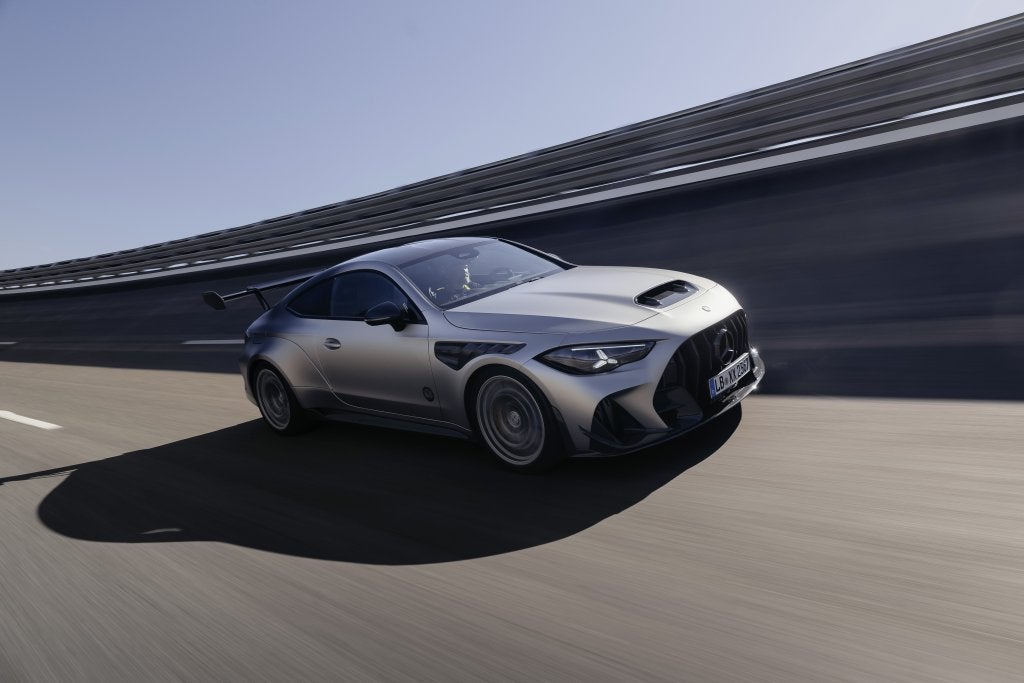


Silver Mercedes-AMG CLE 646 Spezialanfertigung speeding along a racetrack.

Under the hood sits an extensively reworked version of AMG's M177 EVO, a 4.0-liter twin-turbo V8 that produces 646 horsepower, the figure behind the car's name.


That represents a jump of more than 200 horsepower over the CLE 53's inline-six, and AMG built a suspension specifically to manage it: a steel coilover system co-developed with KW Automotive, with four-way adjustable dampers that let an owner tune low-speed and high-speed rebound and compression independently. Body movement under braking, acceleration and turn-in each answer to their own setting, a degree of adjustability that owes more to a customer racing program than to a factory options list.


Weight came out wherever AMG's engineers could take it.

Carbon fiber panels replace steel and aluminum across the body. The rear windows are polycarbonate instead of glass. Even the 12-volt starter battery was swapped for a lighter unit. Altogether, the CLE 646 weighs roughly 375 pounds less than the CLE 53 it started as — a reduction the company says sharpens what it calls an uncompromisingly direct driving experience, and one that shows up in every corner of the car rather than in a single headline component.


The body itself grew to make room for what sits underneath it. A widebody treatment pushes the car's track out 2.4 inches, and a purpose-built aerodynamics package was developed alongside that wider stance rather than bolted onto it afterward. Little of it reads as decoration. Every visible change traces back to the car's stated purpose — closed-circuit lap times and back-road precision, not showroom presence.
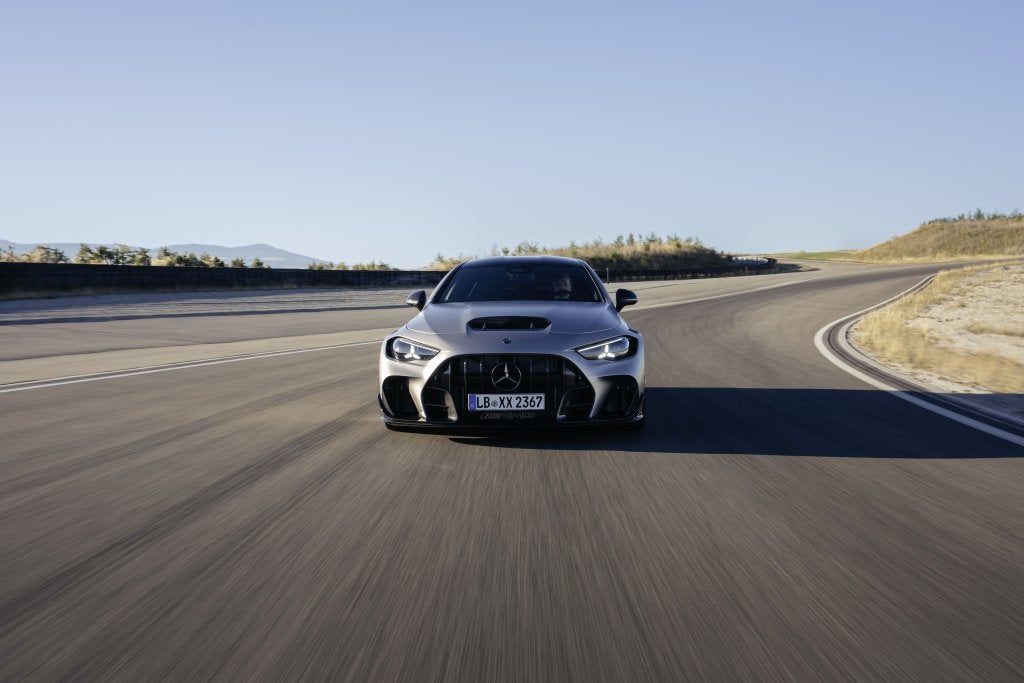


Front view of the Mercedes-AMG CLE 646 Spezialanfertigung driving through a racetrack corner.

The line captures the project's spirit better than a spec sheet could. A small internal team built a prototype first and worked backward into a production process from there, treating the car less as a collection of upgrades and more as a performance system reimagined from the ground up. That approach is built into the name itself.


Spezialanfertigung translates roughly to "special-order fabrication," and Mercedes says the designation reflects the depth of the rebuild rather than a marketing flourish borrowed for the occasion.


Check Out: Best Places to Cool Off During Summer in Chicagoland

Mercedes-Benz launched the Mythos Series to give its most committed collectors something beyond a badge or a horsepower bump: cars built in numbers small enough that ownership itself becomes part of the story.


The PureSpeed leaned into theater — no roof, no windshield, a design built to be looked at as much as driven, and a run of 250 units that still sold out. The CLE 646 leans the other way, toward function, and in doing so makes the case that restraint can be its own kind of statement. It is also the first Mythos car a buyer can drive on public roads without qualification, since the PureSpeed's open cockpit limited where and how it could legally be used.


The timing carries its own weight.


Mercedes-Benz is marking 140 years since Carl Benz patented the first automobile in 1886, and the company has built its 2026 calendar around that anniversary — a flagship S-Class driving to 140 locations across six continents, a steady run of new and updated models across nearly every segment, and now a hand-built V8 coupe that exists almost entirely outside the normal sales channel.
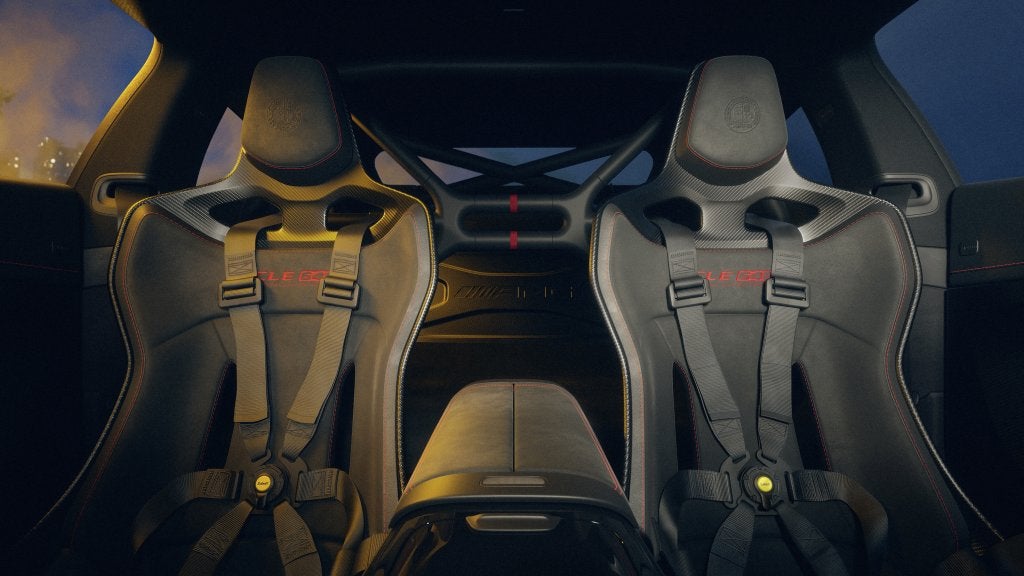

Bucket seats, racing harnesses, and roll cage inside the Mercedes-AMG CLE 646 Spezialanfertigung.

Energy consumption is rated at 15.8 liters per 100 kilometers combined, with CO2 emissions of 359 grams per kilometer, placing the CLE 646 in the top emissions class — figures that matter less to the buyers who already own one than to the engineers who had to account for them anyway.


Each car is assembled entirely by hand at AMG's Affalterbach headquarters, the same facility where the company builds its engines under the one-person, one-engine practice that has defined AMG since the 1990s. That philosophy extends to the CLE 646 in full.


Check Out: The 2027 Mercedes-Benz S-Class Stuns


Where a standard CLE moves through a conventional production line, the Spezialanfertigung moves through a manufactory process more common to a coachbuilder than a mainstream automaker — panel fitment, suspension calibration and interior trim handled individually rather than at volume. It is a slower, costlier way to build a car, and it is also the only way AMG could credibly claim the level of precision the CLE 646 is meant to represent.


Mercedes has not disclosed pricing for the CLE 646, and because the car sold out before its public unveiling, an official figure may never surface.


What is confirmed is scarcity by design: 30 cars, every one already accounted for, none of them destined for a dealership showroom floor. The Mythos Series moves through AMG's direct client relationships rather than standard retail allocation, meaning buyers were identified and confirmed well before September's debut.
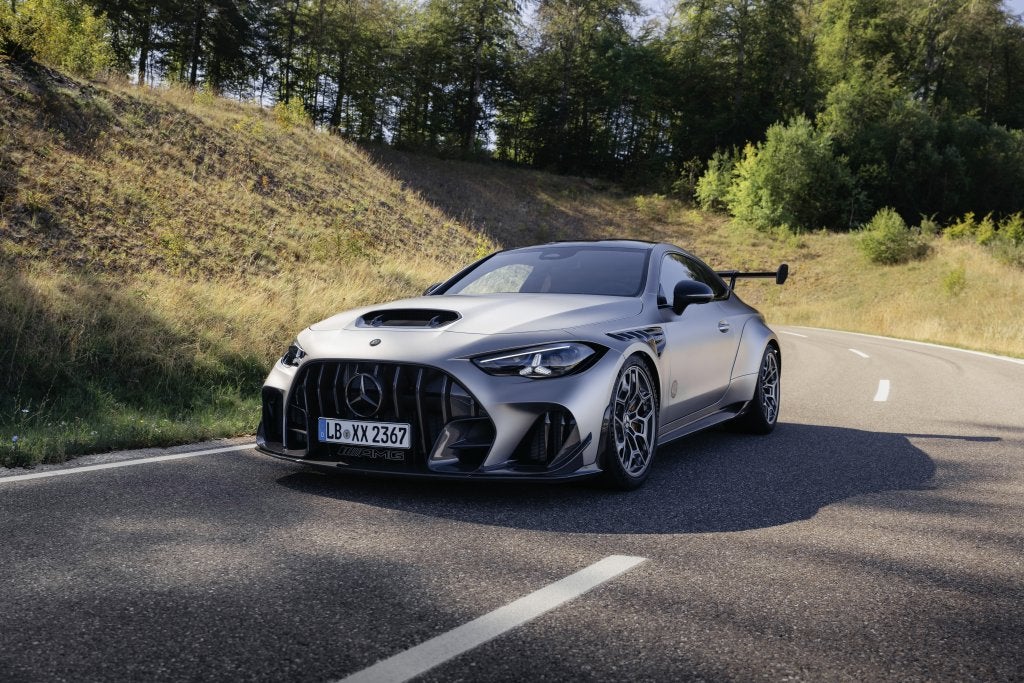

Mercedes-AMG CLE 646 Spezialanfertigung parked on a winding road surrounded by trees.

For AMG, the CLE 646 is a statement about where the performance brand wants to stand as Mercedes-Benz moves through a stretch of major rollouts across its lineup. Surrounded by electrified SUVs and software-driven sedans, a hand-built, rear-drive V8 coupe with dampers tuned car by car reads almost as a rebuttal — proof that the division still designs from the driving experience outward rather than from a features list backward. Whether that proof reaches anyone beyond the 30 confirmed owners is, in its way, beside the point. The CLE 646 was never built to be sold. It was built to exist.


(Sources: Mercedes-Benz Media, Motor1)


Quick Answers


The Mercedes-AMG CLE 646 Spezialanfertigung is the second model in Mercedes-Benz’s Mythos Series, a highly limited collector program built on select AMG platforms. Based on the AMG CLE 53, it swaps standard all-wheel drive for rear-wheel drive only, produces 646 horsepower from a reworked 4.0-liter twin-turbo V8, and weighs about 375 pounds less than the car it’s built from. Mercedes-Benz is building 30 examples by hand at AMG’s Affalterbach headquarters, and every unit sold before the car’s September 10, 2026 public debut. Pricing has not been disclosed. The car is not available through standard dealer allocation, including at Loeber Motors, and buyers were selected through AMG’s direct client program rather than retail order.

Frequently Asked Questions


1. What is the Mercedes-AMG CLE 646 Spezialanfertigung?

It is a hand-built, rear-wheel-drive high-performance coupe based on the AMG CLE 53, produced in a run of 30 examples as the second model in Mercedes-Benz’s Mythos Series.


2. How much horsepower does it have?

The reworked AMG M177 EVO 4.0-liter twin-turbo V8 produces 646 horsepower (475 kW), more than 200 horsepower above the standard CLE 53.


3. Is it all-wheel drive like the standard CLE 53?

No. AMG removed the CLE 53’s all-wheel-drive system entirely; the CLE 646 sends power to the rear wheels only, through an electronically controlled limited-slip differential.


4. How fast is it?

Mercedes-AMG confirms 0 to 124 mph in 11.4 seconds and a top speed of 193 mph.


5. How many will be built, and can I still order one?

Production is limited to 30 units worldwide, and Mercedes-Benz confirmed all 30 were sold before the car’s September 10, 2026 world premiere.


6. What does the car cost?

Mercedes-Benz has not released official pricing. Because the run sold out before launch, an official figure may not be published.


7. Will the CLE 646 Spezialanfertigung be available at Loeber Motors?

No. Mythos Series vehicles are allocated through AMG’s direct client relationships rather than standard dealer inventory, so it will not appear in Loeber Motors’ retail lineup.


Key Specifications


Engine: AMG M177 EVO 4.0-liter twin-turbo V8

Output: 646 hp (475 kW), rear-wheel drive

0-124 mph: 11.4 seconds

Top Speed: 193 mph (310 km/h)

Weight Reduction: Approximately 375 lbs (170 kg) versus AMG CLE 53

Production: 30 units, hand-built in Affalterbach, Germany

Availability: Sold out before public debut; not available through standard dealer allocation


Expert Summary

The Mercedes-AMG CLE 646 Spezialanfertigung represents AMG’s clearest recent statement on where its performance division intends to stand: a hand-built, rear-drive V8 coupe developed with a singular focus on driving dynamics rather than volume or spectacle. Stripped of all-wheel drive, lightened by roughly 375 pounds, and fitted with a coilover suspension co-developed with KW Automotive, the CLE 646 trades the badge-and-horsepower formula of a typical special edition for a full mechanical rebuild carried out to manufactory standards. Limited to 30 hand-assembled examples and already sold out ahead of its September 2026 debut, the car will not reach retail allocation at dealerships including Loeber Motors, making this reporting the primary way most enthusiasts will encounter it.


Posted in:

Related Posts

Group photo of a diverse team of professionals posing inside a modern building in front of large windows and a “WINNING” sign during a corporate event.

Celebrating 90 Years of Loeber Motors: A Memorable Martin Loeber Day Honoring Legacy, Loyalty, and Football History

A look back at a truly unforgettable Martin Loeber Day! From celebrating 90 years of the legacy our founder began to hearing incredible stories from Chicago Bears Super Bowl champion Kevin Butler, it was an evening filled with inspiration, camaraderie, and a little football history. We also celebrated a remarkable milestone honoring John Martin for 50 years at Loeber Motors — a testament to the dedication and people who make our legacy so special. 90 years of tradition, a winning season, and memories we’ll never forget. Here’s to the legacy that brought us here and the future we’re building together!

A Mercedes-Benz GLC cruises through the city, offering compact versatility for Chicagoland fall driving.

Mercedes-Benz GLE vs. GLC: Which SUV Fits Your Chicagoland Fall

Every Mercedes-Benz SUV shopper walking onto the Loeber Motors lot this fall eventually narrows the field to a version of the same question: the GLC that handles like the sedan it's built alongside, or the GLE that has the room a growing family or a loaded trunk actually needs. Both wear the three-pointed star. Both get 4MATIC® all-wheel drive. The difference comes down to scale. Check Out: Latest Mercedes GLC Inventory The GLC rides on a 113.1-inch wheelbase and stretches 185.7 inches overall, numbers that make it easy to park in a North Shore garage built decades before SUVs this size were common. Cargo space runs 21.9 cubic feet behind the rear seats, expanding to 56.3 cubic feet with those seats folded down. That's enough for a Costco run or a weekend bag for two, and for buyers whose SUV mostly handles the Edens Expressway commute and the occasional Fox River Valley day trip, it's rarely a limiting number. The GLE steps up in every dimension that matters to a bigger household. Its wheelbase runs to roughly 117.9 inches, and overall length reaches close to 194 inches, nearly a foot longer than the GLC. Cargo space starts at 22.25 cubic feet behind the standard second row, climbs to 29 cubic feet with the optional power-adjustable second row, and reaches 72.6 cubic feet with that row folded flat. For a family loading up for a Door County weekend or hauling gear for a season of youth sports out of a North Shore driveway, that difference between 56.3 and 72.6 cubic feet is the one that actually decides a purchase. Both SUVs get the new Mercedes-Benz Operating System, MB.OS, for 2027, which brings a faster, more capable version of MBUX to either dashboard along with an AI voice assistant that learns a driver's habits over time. Neither model gives up anything on the technology side to the other; the GLC's third-generation MBUX and the GLE's MB.OS run on comparably modern hardware, so a buyer choosing the smaller SUV isn't settling for an older infotainment experience. Read More: Why a Certified Pre-Owned Mercedes-Benz EQS Makes Perfect Sense in Chicagoland Where the two diverge again is in what's underneath. The GLC's core engine lineup centers on the GLC 300's turbocharged four-cylinder, tuned for the kind of daily efficiency that matters on a car doing five days a week of Chicagoland commuting. The GLE, particularly in its new AMG GLE 53e HYBRID form, brings a 3.0-liter turbocharged inline-six paired with an electric motor for a combined 577 horsepower and 553 lb-ft of torque, enough for a 4.4-second run to 60 mph in a vehicle that can also carry seven passengers when the optional third row is specified. That's a genuinely different kind of SUV than the GLC is trying to be, built for buyers who want a three-row family hauler that still drives like something with a Mercedes-AMG badge on it. 4MATIC® ties both SUVs together in a way that matters more once the Chicagoland forest preserves start losing their leaves. The system has been a core part of Mercedes-Benz engineering for more than 120 years, refined continuously since the 4MATIC® name itself arrived in 1985, and it stays continuously engaged rather than waiting for a wheel to slip before sending torque where it's needed. On both the GLC and GLE, 4MATIC® integrates directly with the standard Electronic Stability Program for what Mercedes-Benz describes as maximum effectiveness in corners and slippery conditions, though the system can't overcome the basic physics of standard all-season tires on packed snow. Mercedes-Benz is explicit on that point in its own published guidance: best performance in snow is obtained with winter tires, a detail Loeber Motors walks every 4MATIC® buyer through regardless of which body style they choose. Towing capability separates the two further for buyers heading toward a North Shore marina or up to a lake house for the season. The GLE's larger frame and available towing packages put real boat-and-trailer capability within reach in a way the GLC, built on a smaller platform, generally isn't intended to match. For a buyer who never tows anything heavier than a bike rack, that difference rarely factors into the decision at all. What ultimately separates a GLC buyer from a GLE buyer isn't badge snobbery or price alone, it's how much SUV a household actually needs to live with every day. Buyers commuting alone or as a couple, parking in tighter North Shore or Glencoe garages, and rarely filling the cargo area past a weekend's worth of luggage tend to find the GLC does everything they need without the extra length. Buyers hauling kids, gear, and the accumulated cargo of a full family life, particularly those eyeing the GLE's available third row, find the extra foot of length pays for itself the first time they need it. Loeber Motors keeps both SUVs on the lot specifically so that comparison happens behind the wheel rather than on a spec sheet, since a fifteen-minute back-to-back test drive tends to answer the size question faster than any cargo number can. Quick Answers Cargo Space (GLC): 21.9 cu ft behind rear seats / 56.3 cu ft folded Cargo Space (GLE): 22.25–29 cu ft behind rear seats / 72.6 cu ft folded Wheelbase: GLC 113.1 in / GLE approx. 117.9 in Overall Length: GLC 185.7 in / GLE approx. 194 in All-Wheel Drive: 4MATIC® standard across both lineups Frequently Asked Questions What's the main difference between the GLC and GLE? Size and capability. The GLE is nearly a foot longer than the GLC, with significantly more cargo room, an available third row, and stronger towing capability, while the GLC offers a more compact footprint for easier parking and daily driving. Does the GLE offer a third row of seating? Yes, an optional third row is available on the GLE, expanding seating from five to seven, something the GLC's smaller platform doesn't offer. Is 4MATIC® all-wheel drive standard on both SUVs? 4MATIC® is available across the GLC and GLE lineups and integrates with the standard Electronic Stability Program. Mercedes-Benz recommends winter tires for the best performance in snow and ice regardless of trim. Which SUV is better for towing? The GLE generally offers stronger towing capability thanks to its larger platform and available towing packages, making it the better choice for buyers hauling a boat or trailer. Do the GLC and GLE share the same technology? Both get the new Mercedes-Benz Operating System (MB.OS) for 2027, with comparably modern MBUX infotainment and AI voice assistant capability across either model. Expert Summary Choosing between the Mercedes-Benz GLC and GLE comes down to how much SUV a household genuinely needs, not which one carries more prestige. Both share 4MATIC® all-wheel drive and the new MB.OS infotainment platform for 2027, so neither buyer is settling for less technology. The real split is cargo room, seating, and towing: the GLC's tighter footprint suits daily Chicagoland driving and easier parking, while the GLE's extra length, available third row, and stronger towing capability serve families and buyers who regularly load the SUV to its limits. Loeber Motors keeps both on the lot specifically so that decision can be made behind the wheel.

Two men speaking on stage at a 50th anniversary celebration.

Loeber Motors Proudly Sponsors the Lincolnwood Chamber Orchestra’s September Performances

Loeber Motors was proud to sponsor the Lincolnwood Chamber Orchestra for two wonderful September performances: Poland Remembered and iOlé! We're grateful to support the arts and help bring exceptional music and inspiring performances to our Chicago community.