
For decades, the Mercedes-Benz C-Class has been the car most people picture when they picture a Mercedes: compact enough for a daily commute, refined enough for a client meeting, and consistently the brand's best-selling nameplate worldwide.
The 2027 model year changes what that sentence means.
For the first time in the C-Class's history, Mercedes-Benz is building it two ways — a redesigned gas and hybrid lineup alongside a fully electric version, the C 400, built from the ground up rather than adapted from an existing platform.
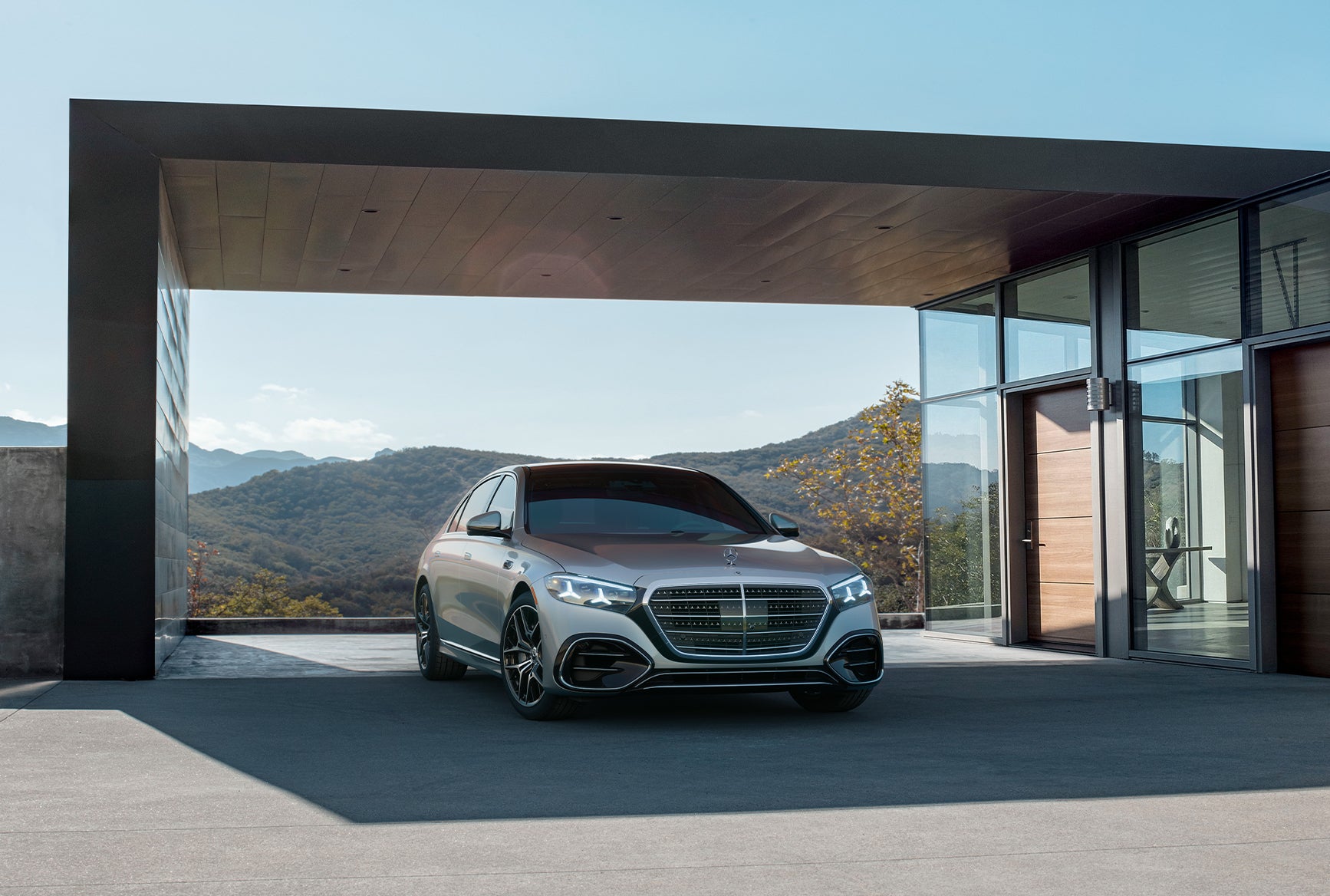
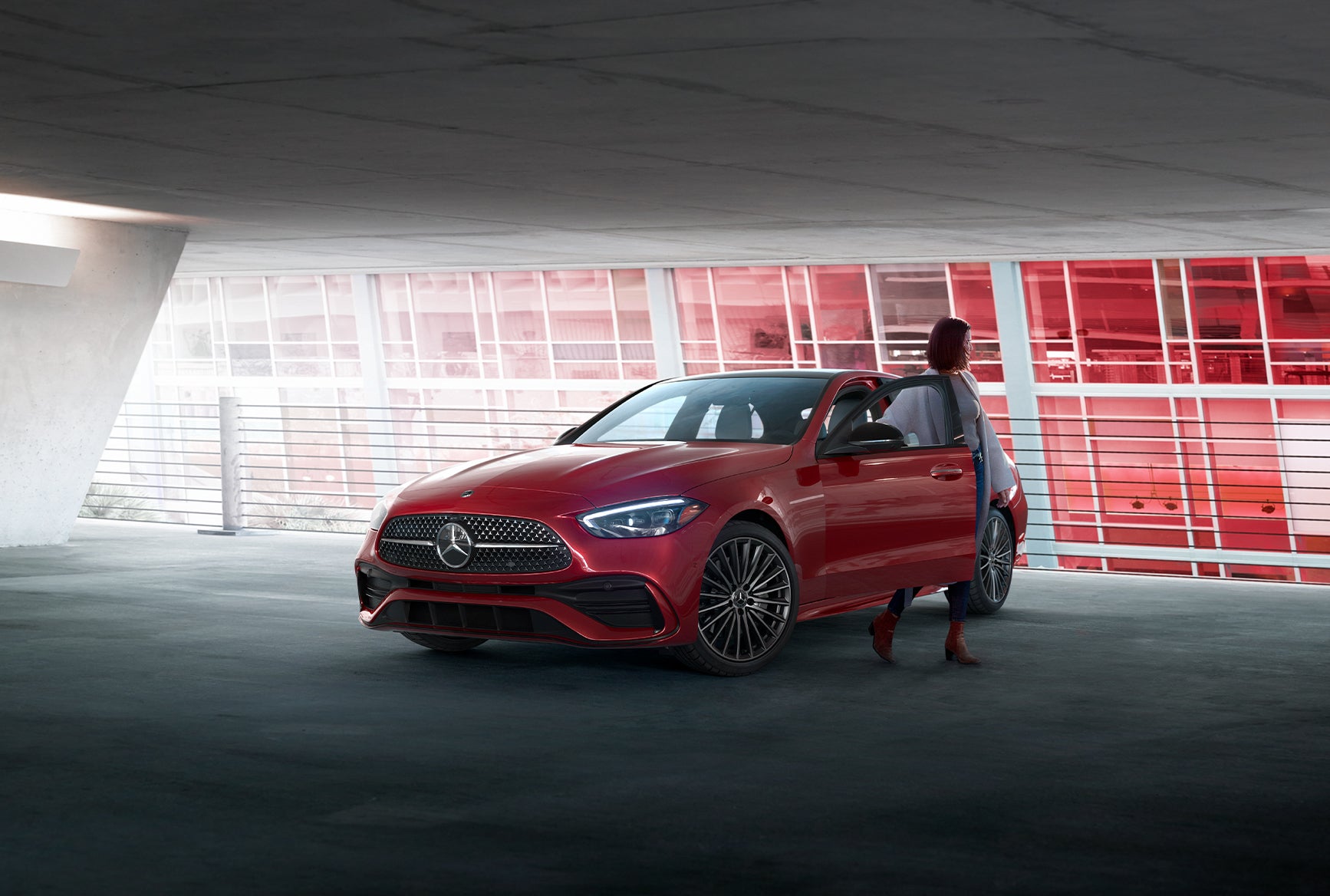
Mercedes-Benz confirmed the sixth-generation C-Class earlier this year. And according to the auto manufacturer the gas and hybrid C-Class gets a larger front fascia with a chrome surround, contour lighting and an illuminated Mercedes-Benz star, along with new headlights carrying a star-shaped lighting signature.
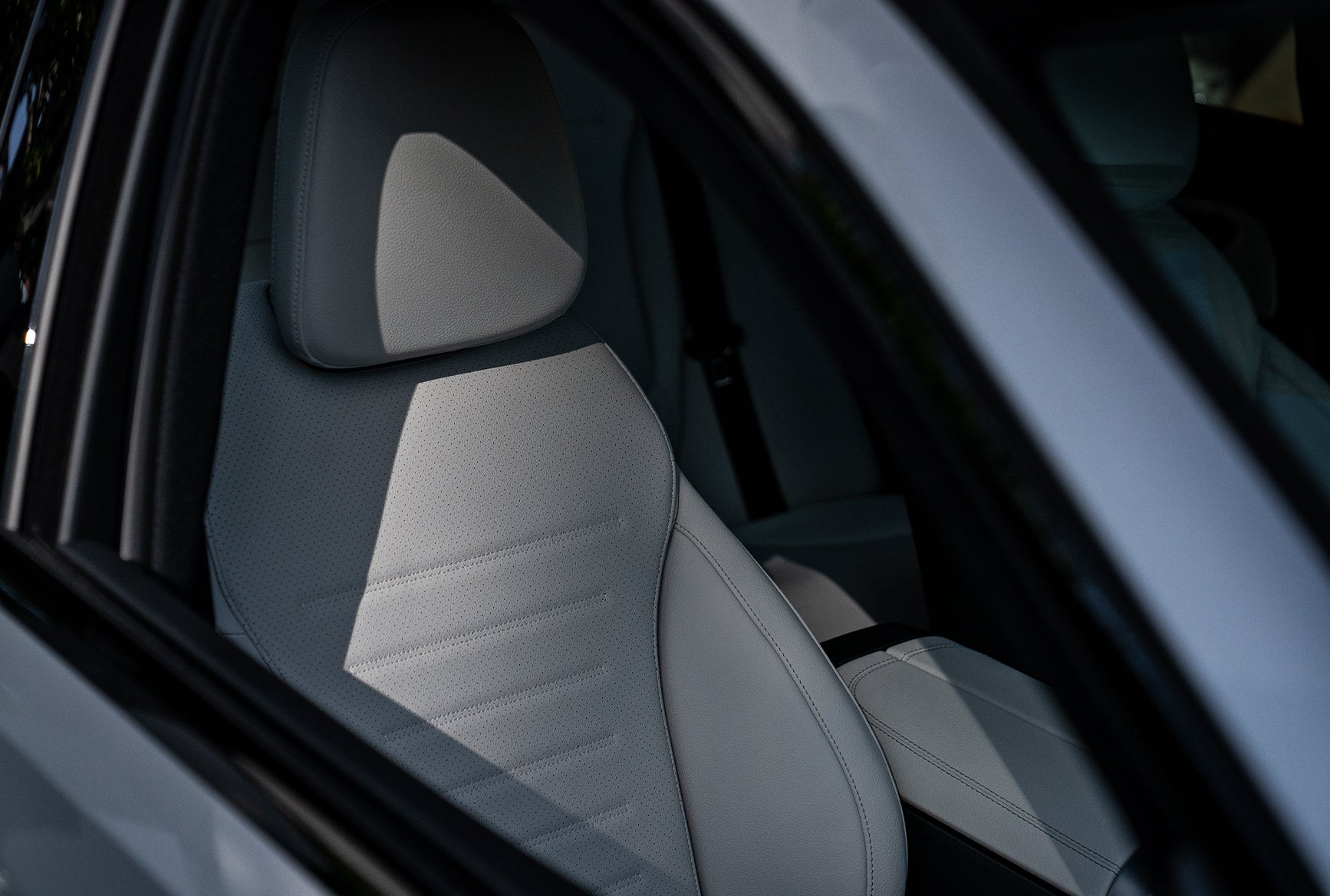
The silhouette has been reworked for a cleaner, sportier stance, and buyers get a choice of new 18- and 19-inch wheel designs alongside two additional exterior colors, Miami Silver Metallic and Moody Sky Grey Metallic. Inside, the cabin gains a Cherry Red upholstery option, Natural Grain Birch Wood trim and a High-Gloss Silver Metallic finish, layered over MB-Tex, leather or Nappa leather seating depending on trim.
The bigger story sits under the skin.
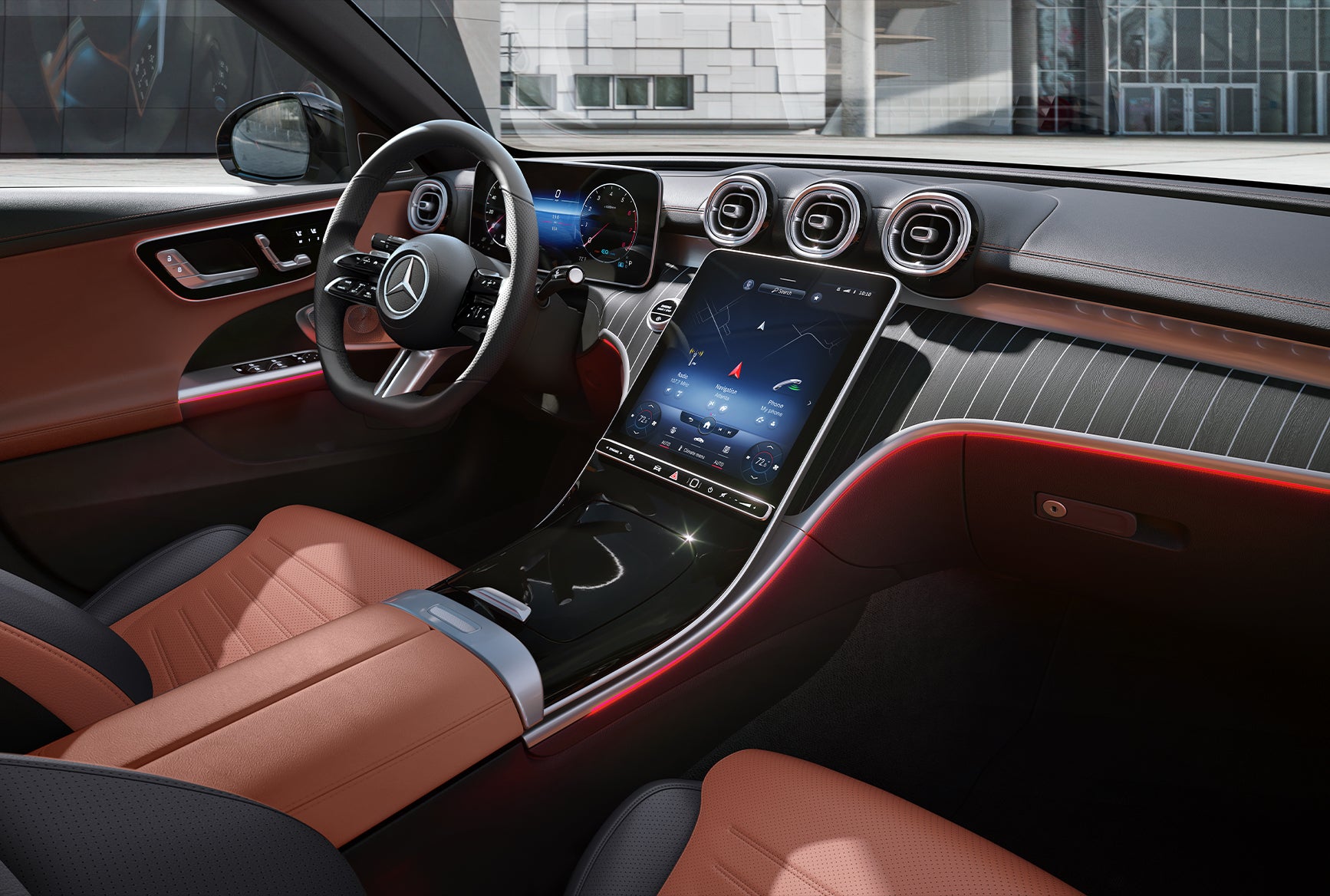
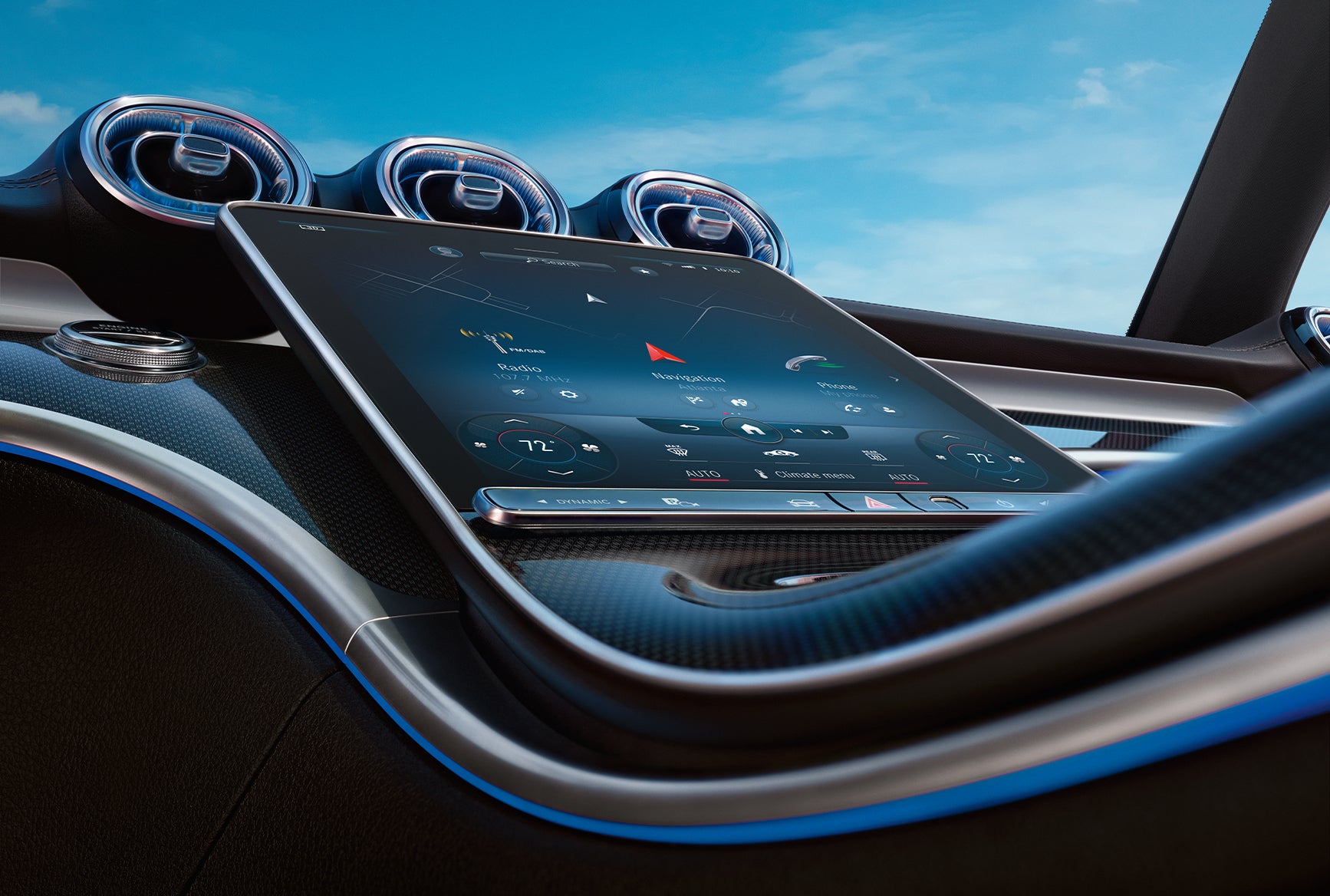
Mercedes-Benz's new operating system, MB.OS, arrives in the C-Class for the first time, running an AI-powered MBUX infotainment system with a portrait-oriented center display and a dedicated driver display. It is the same software backbone the automaker has begun rolling into its larger sedans and SUVs, and its arrival in the C-Class signals that the update is less a mid-cycle refresh than a full technology transplant into the brand's volume seller.
The C 400 takes that transplant further. Built as an electric vehicle from the start rather than converted from a combustion platform, the C 400 rides on an 800-volt architecture, the same high-speed charging foundation found in Mercedes' larger EQ models.
Estimates put its range near 473 miles on a full charge, a figure that would place it among the longest-range electric sedans sold in the country. Power comes from two motors — one at each axle — for standard all-wheel drive, paired with a 94-kilowatt-hour battery and, notably, a two-speed transmission, a detail more common in high-performance EVs than in a compact luxury sedan. Mercedes says the setup improves both efficiency at highway speed and acceleration off the line.
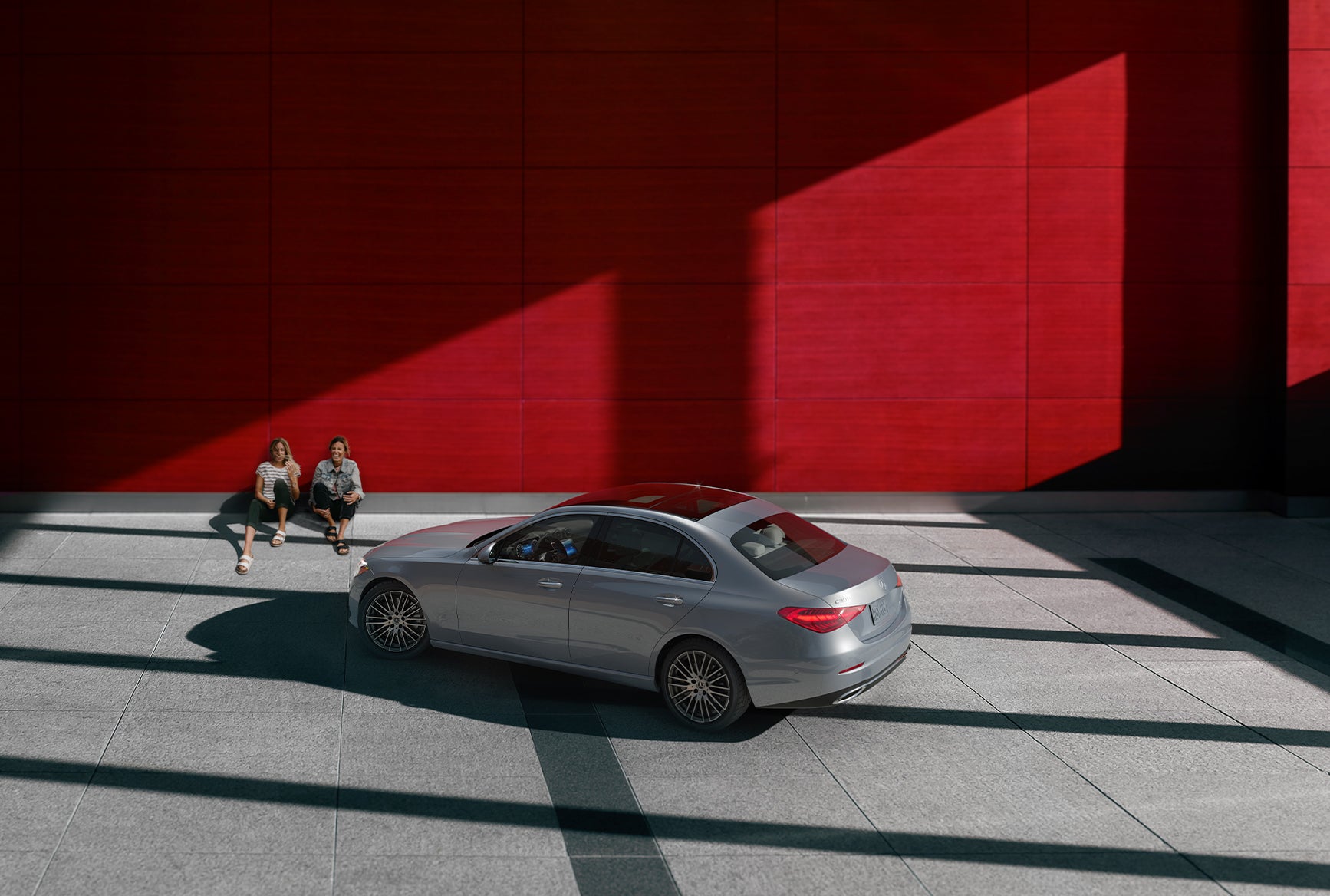
The C 400's styling breaks from the swoopier, more aerodynamic shapes that defined Mercedes' earlier EVs. Where those cars wore an egg-like silhouette built almost entirely around drag reduction, the C 400 keeps a traditional three-box sedan profile, complete with a conventional trunk rather than a liftback.
Mercedes added a front trunk as well, a small but practical nod to owners who've grown used to the extra storage EVs can offer. The company also reworked the braking system for a firmer, more conventional pedal feel — an area where its earlier electric sedans drew criticism — and reintroduced physical buttons for some frequently used controls, even as most functions still route through the center touchscreen.
For a Chicagoland driver, the range figures matter in a specific way.
A commute up the Edens Expressway or across to the North Shore rarely taxes a battery, but the kind of weekend trip Chicagoland Mercedes-Benz owners tend to take — up to Door County, out along the Fox River Valley, or around the marinas that line the North Shore in summer — asks more of a car's range than daily driving does. An estimated 473 miles puts most of those routes within reach on a single charge, with 800-volt fast charging closing the gap quickly on the way back.
Safety and driver-assistance technology carries over from Mercedes' larger models as well. Both the gas C-Class and the C 400 are expected to offer MB.DRIVE, the automaker's current driver-assistance suite, with exterior cameras and radar sensors monitoring the car's surroundings continuously. Because the system runs on MB.OS, software updates arrive over the air rather than requiring a dealership visit, a shift Mercedes has been phasing in across its lineup over the past two model years. For a car that will spend most of its life in daily Chicagoland traffic rather than on a track, that steady stream of updates may end up mattering more to owners than any single launch-day spec.
The redesign also lands at a deliberate moment for Mercedes-Benz. The company has built its entire 2026 and 2027 product calendar around the 140th anniversary of Carl Benz's original automobile patent, and the C-Class carries particular weight in that story: it's the model more people have owned, leased or ridden in than any other Mercedes nameplate. Redesigning it twice over — once as a combustion and hybrid car, once as a ground-up EV — reflects a bet that the brand's most familiar model is also its best proving ground for unfamiliar technology.
Mercedes-Benz has not finalized U.S. pricing for either the gas C-Class or the C 400, though early industry estimates place the C 400 in the $55,000 to $65,000 range.
Check Out: Best Places to Cool Off During Summer in Chicagoland
Both versions are expected to reach U.S. dealerships in 2027, with the C 400 arriving first, likely in the spring, ahead of the combustion and hybrid variants. The C 400's all-wheel-drive-only launch trim, badged C 400 4Matic, will be the first configuration available when the car goes on sale, with additional powertrain and trim options expected to follow through the model year.
Inside, the differences between the gas C-Class and the C 400 are smaller than the powertrain gap might suggest.
Both share the same portrait-oriented center display, the same driver display, and the same MBUX Virtual Assistant, so a shopper moving between a combustion C 300 and an electric C 400 on the Loeber Motors lot won't be relearning the car from the driver's seat. The distinction shows up instead in details specific to how each car is built: the C 400's front trunk, its two-speed transmission tuned for regenerative braking, and a battery pack integrated low into the floor that Mercedes says improves the car's center of gravity relative to its combustion sibling.
What makes the 2027 C-Class worth watching isn't any single spec.
It's the fact that Mercedes-Benz chose its most recognizable, highest-volume model to carry its newest software platform and its most range-focused EV architecture at the same time. The S-Class gets the flagship treatment and the headlines that come with a halo car; the C-Class gets the harder assignment; proving that same technology works at scale, for the buyer cross-shopping a compact sedan rather than commissioning a limousine. Whichever version — gas, hybrid or electric — ends up in a Loeber Motors customer's driveway, it will be running the same operating system Mercedes-Benz is betting its next decade on.
The plug-in hybrid variant fills the space between those two extremes, and Mercedes-Benz has treated it as more than a stopgap. The C 300e pairs a turbocharged four-cylinder with an electric motor built into the transmission, giving drivers a meaningful all-electric commute range before the gas engine ever engages. For a buyer who splits time between the city and the North Shore suburbs, that configuration solves a problem the full EV can't: charging infrastructure remains uneven outside Chicagoland's core, and a plug-in hybrid never leaves a driver stranded waiting on a public charger. Mercedes-Benz has positioned the C 300e as the trim most likely to appeal to a first-time electrified buyer, someone testing the water before committing to something like the C 400.
Trim strategy across the lineup follows a familiar Mercedes-Benz pattern, expanded to cover three distinct powertrains. The base C 300 arrives in rear-wheel-drive and 4Matic all-wheel-drive configurations, aimed at buyers who want the redesign's styling and technology without stepping up to electrification. Above it sits the AMG-tuned C 43, which carries over a turbocharged four-cylinder boosted by an electric auxiliary compressor, a setup unique to Mercedes-AMG that closes much of the gap to a six-cylinder without the added weight. An AMG C 63 variant is expected to follow later in the model year, continuing the performance flagship's shift toward hybridized four-cylinder power that began with the previous generation.
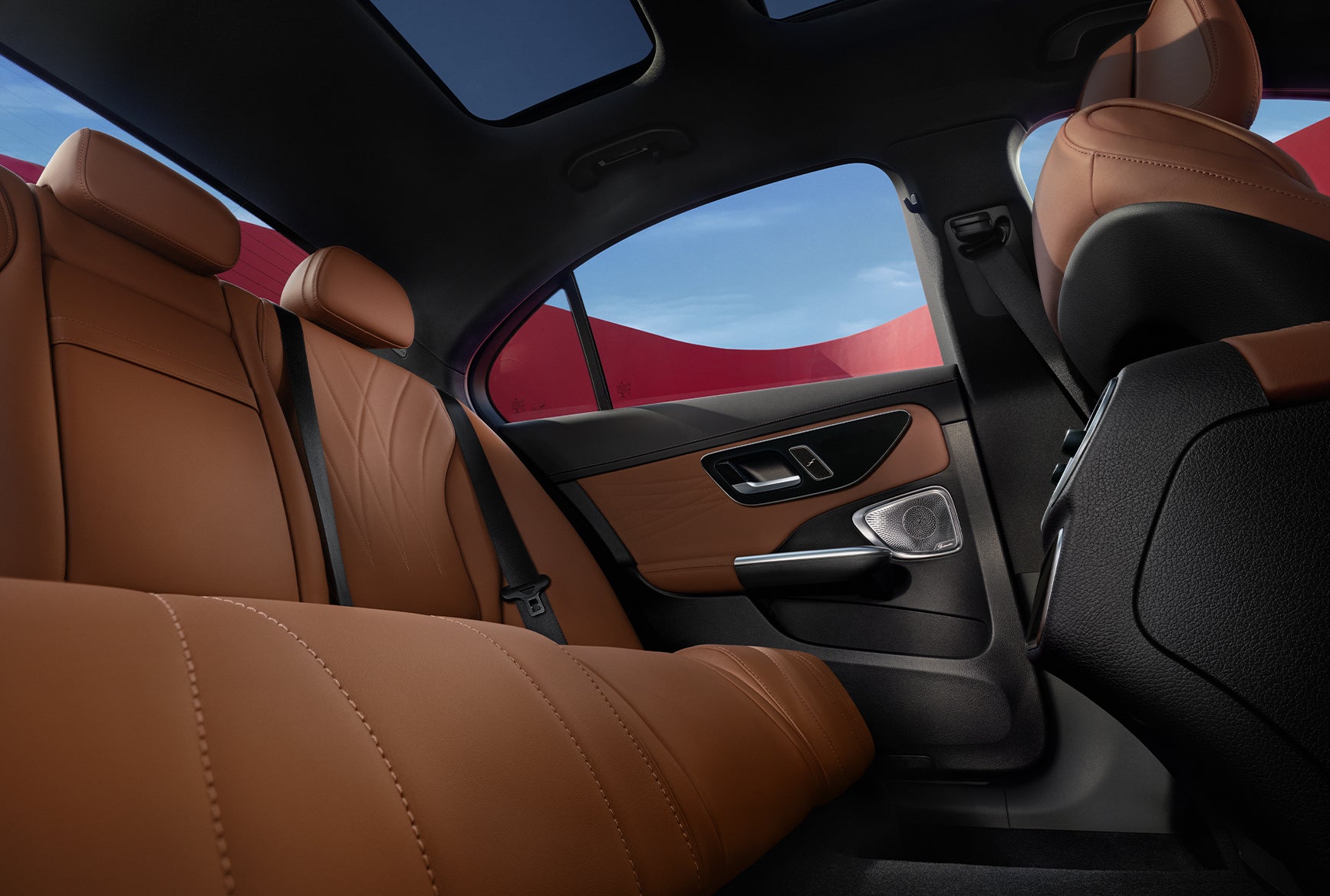
Inside, the redesign leans harder into personalization than past C-Class generations did. Buyers can choose from an expanded ambient lighting system with dozens of color combinations, synced to selectable drive modes so the cabin's lighting shifts subtly between a comfort setting and a sport setting. An available Burmester surround-sound system, a longtime signature on Mercedes-Benz's larger sedans, comes to the C-Class in a version scaled for the smaller cabin. Seat upholstery options extend beyond the Cherry Red introduced with the redesign to include several new two-tone combinations, giving the interior configurator meaningfully more range than the outgoing generation offered.
Production for the redesigned C-Class continues at Mercedes-Benz's Bremen plant in Germany, the same facility that has built the nameplate for decades, with the C 400 sharing that production line rather than requiring a dedicated EV-only facility. That decision reflects a broader shift in how Mercedes-Benz builds electric vehicles: rather than isolating EV production to specialized plants, as the company did with some earlier electric models, the C 400 rolls down the same line as its gas and hybrid siblings, differentiated by battery and drivetrain installation rather than an entirely separate manufacturing process.
Check Out: The 2027 Mercedes-Benz S-Class Stuns
For Loeber Motors, the rollout means a wider ordering window than a typical redesign cycle offers. Customers configuring a 2027 C-Class through Loeber will be choosing not just paint and wheels, but a powertrain philosophy: a familiar four-cylinder gas car, a plug-in hybrid built for a mixed commute, a fully electric sedan rated near 473 miles of range, or, eventually, an AMG variant built for the driver who wants the redesign's technology wrapped around genuine performance. That range of choice, built into a single nameplate rather than spread across separate model lines, is itself the story of the 2027 C-Class — a car trying to be the right answer for nearly every kind of Mercedes-Benz buyer at once.
Ready to see the 2027 C-Class in person? Contact Loeber Motors to reserve yours.
(Sources: Mercedes-Benz USA and Motor1)
Quick Answers
The 2027 Mercedes-Benz C-Class marks the sixth generation of Mercedes’ best-selling nameplate and, for the first time, arrives in two distinct forms: a redesigned gas and hybrid C-Class, and the all-new C 400, the model’s first fully electric version. The C 400 rides on an 800-volt architecture with an estimated range near 473 miles, dual motors producing 482 horsepower combined, a 94-kWh battery and standard all-wheel drive. Both versions run Mercedes’ new MB.OS operating system with AI-powered MBUX infotainment. Pricing has not been finalized; the C 400 is estimated at $55,000 to $65,000 and is expected to arrive first, likely in spring 2027, ahead of the gas and hybrid variants. Loeber Motors expects to carry both versions as they reach U.S. dealerships.
Frequently Asked Questions
1. What is new about the 2027 Mercedes-Benz C-Class?
It’s the sixth-generation redesign of Mercedes-Benz’s compact luxury sedan, with a new front fascia, updated interior trims, and the brand’s new MB.OS operating system with AI-powered MBUX infotainment.
2. What is the C 400?
The C 400 is the first fully electric version of the C-Class, built from the ground up on an 800-volt electric architecture rather than adapted from the gas platform.
3. How much range does the C 400 have?
Early estimates put range near 473 miles on a full charge, though Mercedes-Benz has not published an official EPA figure.
4. What powertrain does the C 400 use?
A dual-motor setup producing 482 horsepower combined, paired with a 94-kWh battery, a two-speed transmission and standard all-wheel drive.
5. When does the 2027 C-Class go on sale?
The C 400 is expected to arrive first, likely in spring 2027, with the redesigned gas and hybrid C-Class variants following later in the model year.
6. How much will the 2027 C-Class cost?
Mercedes-Benz has not finalized U.S. pricing. Early industry estimates place the C 400 between $55,000 and $65,000; pricing for gas and hybrid trims has not yet been estimated.
7. Will the 2027 C-Class be available at Loeber Motors?
Yes. Both the redesigned gas and hybrid C-Class and the electric C 400 are expected to reach Loeber Motors as they roll out to U.S. dealerships in 2027.
Key Specifications
Model Update: Sixth-generation C-Class, first year offering a fully electric C 400 alongside gas and hybrid variants
C 400 Powertrain: Dual electric motors, 482 hp combined, 94-kWh battery, two-speed transmission, standard all-wheel drive
C 400 Range (est.): Up to 473 miles
Architecture: 800-volt electric platform (C 400); MB.OS operating system across all C-Class variants
Estimated Pricing: C 400: $55,000–$65,000 (not yet finalized by Mercedes-Benz)
On Sale: C 400 expected spring 2027; gas and hybrid variants to follow
Expert Summary
The 2027 Mercedes-Benz C-Class represents a turning point for the brand’s highest-volume nameplate, splitting for the first time into a redesigned combustion and hybrid lineup and a purpose-built electric C 400. Rather than reserving its newest technology for flagship models, Mercedes-Benz is deploying its MB.OS operating system and 800-volt EV architecture in the car most likely to be a customer’s first Mercedes-Benz. With an estimated range near 473 miles and standard all-wheel drive, the C 400 positions itself as a genuinely usable electric option for Chicagoland driving and weekend travel alike. Loeber Motors expects to carry both the electric and combustion versions